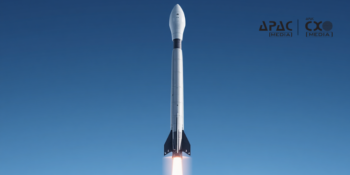

























New Delhi, August 6(APAC Media): A SpaceX rocket stage has crashed into the Moon, creating a new crater and giving scientists a rare chance to study the impact in real time.
The object was the upper stage of a Falcon 9 rocket used to launch Firefly Aerospace’s Blue Ghost lunar mission in January 2025. After completing the mission, the rocket stage remained in space and gradually moved towards the Moon before crashing into the lunar surface at around 5,400 mph.
The impact took place near the Einstein crater on the Moon’s far side. Although no spacecraft captured the collision from close range, astronomers at the European Southern Observatory’s Very Large Telescope in Chile observed the impact from Earth. They detected traces of sodium and lithium in the dust cloud, providing valuable data about the Moon’s surface and the rocket debris.
Scientists believe the sodium was released from the Moon’s soil, while the lithium may have come from the rocket stage. Researchers said a detailed study will help them better understand how artificial objects interact with the lunar surface.
The incident was not a planned mission. According to SpaceX, the rocket stage remained in space after completing its task because it was needed to send the spacecraft towards the Moon. Over the following months, gravity and solar activity slowly changed its orbit until it collided with the Moon.
The crash has also drawn attention to the growing issue of space debris. With NASA’s Artemis programme and several private lunar missions planned over the coming years, space agencies are working on ways to prevent unused rocket stages from drifting uncontrolled in space. The latest impact has provided useful scientific data while also highlighting the need for better management of future lunar missions.