












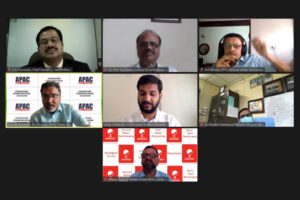
 The Centre has notified fresh guidelines on groundwater use, prescribing penalties for extracting water without permission. It has also imposed a set of regulations that include annual water audit by industries, adopt suitable methods and reduce the usage of water by 20-30 per cent in three years and install tamper proof flow meters.
While the directives are clear, the implementation at the ground has been a challenge. APAC News Network organized the third edition of the webinar series on April 30, 2021 that was supported by National Water Mission, Central Ground Water Board, IIT Kanpur and Technology partner Kritsnam Technologies to discuss and understand the ground realities and find solutions.
The webinar was moderated by Souvik Goswami, co-founder, APAC News Network.
 Keynote address by G C Pati, Chairman, Central Ground Water Board
G C Pati said that the water per capita at the time of Indian independence was good but by the year 2011 it touched a level of stress and in technical parlance what one terms ‘water stress situation’. If India does not take adequate measures by the year 2050, there could be a situation of water scarcity.
Explaining the present situation, he said that the total utilisation of water is 1132 billion cubic metres out of which 690 billion cubic metre is surplus water. 60% of the consumable groundwater is used for irrigation purposes in India and 80% of irrigated land that was added over the years was from groundwater resources.
India, presently tops in groundwater withdrawal in the world with 250 billion cubic metre and 89% of water withdrawal is used for irrigation purpose. Industries too use a lot of water and in some cases the usage runs into hundreds of kld.
Keeping in mind the growing water usage and stress on groundwater, the CGWB issues NOC for industries and for those whose consumption is very high.
Mr Pati said that 21% of the groundwater resources are over exploited and there is a great need to regulate and augment water resources. The water footprint of industries in India is the highest in the world. Indian industries use much more water than their counterparts in other countries to produce products and there is a lot of scope to reduce the usage by adopting technology.
Metering is an important part to monitor implementation of regulation, we have given instructions to install tamper proof digital flow meters at all groundwater extraction points for users drawing more than 10 KLD, failing which there is a penalty imposed.
There are six lakh industries and a majority have not taken NOCs and proper permissions from authorities. The Central Ground Water Board and its agencies are planning for awareness programmes to encourage organizations to adhere to the guidelines.
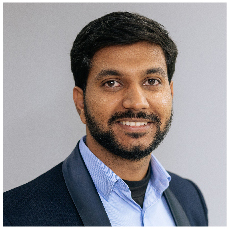 Vinay Chataraju, Co-founder & Head, Business Development, Kritsnam Technologies
Data in the water sector as opposed to the power sector is less and technology penetration has been limited in the water sector. All the developments have been on the water treatment side and comparatively less R&D has gone on the monitoring side. Post the new guidelines, the need for data driven decision making especially for industries has risen.
Accessibility of data when required was less in the water sector and this lacuna prompted the Dhaara Smart Ultrasonic flow meter, said Vinay. Explaining the advantages, he said that the company is working with more than 100 industries and timely advice has helped industries meet the regulatory norms and also save water.
As per the feedback and experience of working with several industries – there has been a massive gaps in information sharing between management and operators, we are able to fill the gap using simple automated SMS and WhatsApp messages, many industries were able to track the water usage and reduce consumption, said Vinay.
 The continuous water auditing for industries helps generate data real-time and monitor the actual cost of water associated with the product unit economics. In the past manual reading of data could not analyse data, but with digitising the pipeline network and continuous internal water auditing has gone a long way in keeping a track of water usage.
The benefit of Dhaara Smart Ultrasonic flow meter helps in: Identifying leakages, water inefficiencies, total pump working hours in a day, water demand forecast, real-time alerts and electricity bill forecasts.
For further information, please connect at vinay@kritsnam.in
 Dr Pandith Madhnure, Director, Ground Water Department, Government of Telangana
Telangana State is one of the youngest in the country, it came into existence in 2014 and since then the government has taken up several projects related to water. Explaining about the initiatives, Dr Pandith said one of the foremost and successful projects has been Mission Kakatiya under which 27,000 tanks out of 47,000 tanks were rejuvenated and filled with water from the Kaleshwaram project.
Another noteworthy achievement by the Telangana Government, said Dr Pandith was the rise of groundwater to the extent of 3.5 meters in Sangareddy and Siddipet.
He also shared due to the water conservation initiatives, 6-7% of water extraction was reduced in the state. Telangana is one of the few states that has been pro-active and has had the TS Walta Act in force much before the new guidelines came into force.
The Telangana State Industrial Project Approval & Self Certification System (TS-ipass) has been received well and has been useful for speeding the process of applications for setting up industries. Dr Pandith said that the applicant would know if his application was given the green flag or rejected with valid reasons within 15 days. It is done based on hydrological investigation within the time-frame.
The new CGWA guidelines including telemetry metering, water auditing and impact assessment are under consideration a proposal was sent to the government and awaiting the approval from higher authorities.
 Anil Bhatia, Chief Technical Officer, Haryana Water Resources Authority (Rtd. Director CGWB)
The water stress has been immense in the NCR region and several municipalities including Faridabad and neighbouring ones have had to face innumerable challenges. The Haryana Government started promoting certain areas where the water was saline for industries, especially in the south eastern region as it was unsuitable for agriculture. This measure helps in maintaining the fresh groundwater in other areas, said Anil Bhatia.
At one point of time, Gurgoan was highly stressed and a canal was built resulting in improvement but it would not be sufficient for the future. Permission for tube wells was stopped which helped in controlling exploitation of groundwater.
The Haryana Government decided to make self-auditing by the industries those who use 100 to 500 kld. However, Anil Bhatia said that it was not technically feasible to prepare an audit for 100 kld usage.
In the near future there is a plan to prepare an Impact Assessment report for one cluster which would also include air pollution parameters. He suggested that in Haryana, 90 percent of the water is used for agriculture but there are no guidelines for the sector. If certain guidelines are stipulated it would go a long way in preserving groundwater.
We in Haryana are committed to implementing the best practices by taking cues from CGWA and also other parts of the world for sustainable use of groundwater.
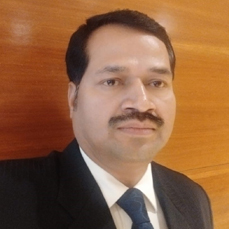 SK Chaurasia, Chief Executive, Aditi Infotech
The January 8, 2021 guideline states that industries need to install tamper proof digital flow meter with telemetry system. This he said is causing stress as there is a gap in communication and all the industries depend on consultants. Due to lack in defining ‘tamper proof’ there is confusion and due to the stipulated time frame, many installed devices which may not conform to the CGWA guidelines.
Mr Chaurasia suggested that there was a need to conduct workshops for consultants and streamline a few major burning issues like meter specifications so that there is a standard guideline to follow. Also, he said the penalties imposed could go up to Rs 2 lakh to Rs 5 lakh which is resulting in great distress to industries who are now reeling under the pandemic.
 Manoj Joshi, Proprietor, Greenex Corporation
Mr Manoj suggested that there is a need to improve the communication between the industries and the CGWA. He called for a telephonic support system at the central authority for clarifications and speedy redressal of issues. He stated that many in industry do not know or understand the importance of fulfilling the compliances and that there was a need for campaigns to sensitise them.
The CGWB is collecting charges for three years in advance and that this was resulting in financial stress. He said the charges should be based on consumption as telemetry meters are already made mandatory. There is also a 50% rebate but there is no clarity on how to avail it. He also suggested the authority to waive the Rs 1 lakh penalty that is based on the environmental act.
Key points from the webinar:
- The authorities have been unable to crack the whip on industries that are not taking NOC. Need to sensitize the importance of the same to the users.
- Indian industries use much more water than their counterparts in other countries to produce products and there is a lot of scope to increase water use efficiency by adopting technology.
- There are six lakh industries and a majority have not taken NOCs from authorities. The Central Ground Water Board and its agencies are planning for awareness programmes through media and other platforms.
- The Telangana Government has written to the central authority to review the present TS Walta Act and suggest changes.
- 90% of the water is used for agriculture but there are no guidelines for the sector. There is a dire need to bring regulations in this sector which would go a long way in preserving groundwater.
Suggestions:
- The definition of tamper proof flow meters needs to be defined and a clear guideline issued so that the industries know exactly what to install.
- Majority of the industries depend on consultants for NOC clearance and meeting the regulations but are unsure about the guidelines. Training programs for them would help.
- Industry wants the CGWB to waive off penalties as the industry is under financial stress due to the ongoing Covid-19 pandemic.
- The CGWB is collecting charges for three years in advance and that this was resulting in financial stress. As telemetry flow meters are made mandatory it would be wise to change on a monthly basis based on the consumption.
Participation:
- G C Pati, Chairman, Central Ground Water Board
- Vinay Chataraju, Co-founder & Head Business Development, Kritsnam Technologies
- Dr Pandith Madhnure, Director, Ground Water Department, Government of Telangana
- Anil Bhatia, Chief Technical Officer, Haryana Water Resources Authority (Rtd. Director CGWB)
- SK Chaurasia, Chief Executive, Aditi Infotech
- Manoj Joshi, Proprietor, Greenex Corporation
- The webinar was moderated by Souvik Goswami, Co-founder & Group Chief Editor, APAC News Network