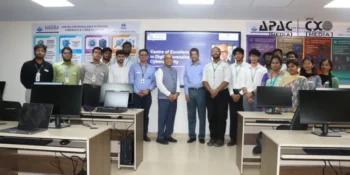











The 2nd APAC Higher Edtech Conclave on March 10 was inaugurated on March 10 with a
phalanx of education policymakers, senior higher education and industry leaders. The session
discussed the role of government in fast-forwarding the future course of education.
Prof Saroj Sharma, Chairperson, National Institute of Open Schooling claimed, “During the
pandemic apart from NIOS students, the students from other boards like CBSE, ICSE, all
benefited from our TV channel — Pradhan Mantri E-Vidya channel. We used to broadcast on
TV, Radio and the teaching programs would run for eight hours continuously from our studio.
With this, the importance of digital medium was proved. NIOS is catering to the world’s largest
students through distance mode, and we are prepared for online education.”
“The AICTE is taking holistic approaches to bring positive changes in technical education in line
with the New Education Policy,” informed Col B Venkat, Director, AICTE. “The faculty
members should always be open to learning new things and get equipped with new skill sets
from time to time,” he added.
Dr Vinnie Jauhari, Learning and Skills Lead, Microsoft India informs that the Swayam, MOOC
platform enables development of skills and competencies beyond mainstream education,
conventional curriculum and aligning with industry expectations. Accordingly her advice,
“Educators are transitioning to the role of facilitators and the focus is increasing on the student
learning, and deploying technology in meaningful ways.”
Dr Biswajit Saha, Director, CBSE appealed to educational researchers in the country to conduct
their own studies, instead of depending on suggestions from the West. “CBSE would support its
27,000 schools, where about 10 percent of the country’s students are studying, without affecting
their autonomy”, he added.
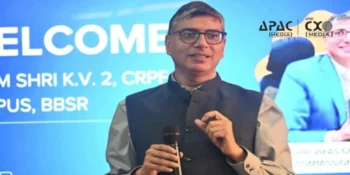
“Tech-oriented collaborative education is the future,” proclaims Navin Mital, Commissioner,
Collegiate & Technical Education Department, Govt of Telangana. “Tech-oriented platforms are
the key to upskilling and rescaling the large amount of manpower. With online platforms, it is
also becoming easier for the working class to upskill themselves, which would be difficult in
case they had to physically attend institutions,” he added.
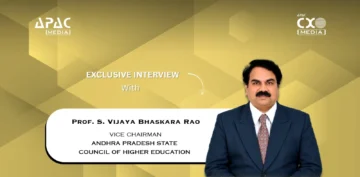
“The government is making all efforts to ensure quality and high standards in institutions of
higher education in the State”, informs Prof K Rama Mohana Rao, Vice chairman, Andhra
Pradesh State Council of Higher Education. State-level assessment and grading of the institutions
was being considered, he said, adding that the institutions that perform well would get incentives
while low-performing ones would invite action.
Six conventional universities in Telangana have decided to set up coaching classes for
competitive exams in the state, which will prepare and equip the students to excel in various
competitive examinations. “The competitive examination coaching classes will be launched by
the Telangana State Council of Higher Education (TSCHE), Hyderabad,” informed Prof., V
Venkataramana, Vice- Chairman, Telangana State Council of Higher Education.