


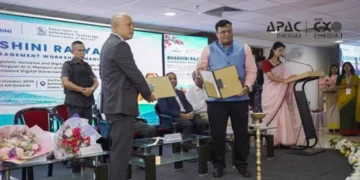

















Learning Spiral in conjunction with APAC News Network organized a webinar on Leveraging Technology for Examination Assessment processes. Participants included Dr Shasi Anand Sridharan, VP, Kalasalingam University, Dr T Sasiprabha, VC, Sathyabhama Institute of Science & Technology, Dr Balakrishna Shetty, VC, Sri Siddhartha Academy of Higher Education (Deemed to be University), Dr Vikas Singh, VC, Geeta University, Prof Dharam Buddhi, VC, Uttaranchal University, Dr Manjeet Kaur Kaushal, VC, CMJ University, Prof B.S Satyanarayan, VC, C.V Raman Global University, Bhubaneswar, Dr B Sendilkumar, Dean & Director — Health Sciences, Vinayaka Missions Research Foundation (Deemed to be University) and Manish Mohota, MD, Learning Spiral.
The consensus of the discussion was that leveraging technology in assessment processes led to several benefits.
- Greater variety and authenticity in the design of evaluations.
- Enhanced student commitment, for instance through interactive formative assessments with adaptive feedback.
- Choice in the planning and area of evaluations.
- Productive accommodation, marking, balance and information storage processes.
- Consistent results with opportunities to combine human and computer marking.
- Instant feedback.
- Innovative methodologies based around the use of creative media and online peer and self-assessment.
- Precise, convenient and accessible evidence on the effectiveness of educational modules plan and conveyance.
- Distribution of question items in a secure manner.
- Very little hassle in creating and taking tests / assessments for continuous evaluation.
“Cloud-based learning provides increased flexibility, as students access and complete online assessments at a time that best suits their individual learning style and needs. All they need is an internet-ready device and a web-based or virtual environment. With personalised learning shown to motivate students into becoming investors in their own education, such student-led approaches are becoming increasingly popular,” commented Dr Shasi Anand Sridharan, VP, Kalasalingam University.
“An eminent pattern in the Indian education industry, especially in the section of test preparations, is the increasing shift towards use of technology in assessment processes. The candidates are assessed on a completely automated platform without manual intervention. It supports a simple to utilize interface for the test takers as well as the conductors. Furthermore, the capacity to generate quick outcomes is a big incentive for the adoption of the modern automated examination system,” explains Manish Mohta, MD Learning Spiral.
“With the current prevalence of remote learning and growing interest in e-assessment, most teachers have come to understand the benefits of technology for assessment. However, what is not yet widely celebrated is that technology-enabled assessment can be used for more than just tracking results and discipline knowledge. By combining data with learning analytics, technology also offers great promise in helping pupils learn through assessment,” remarked Dr T Sasiprabha, VC, Sathyabhama Institute of Science & Technology.
“Along with a variety of online resources to boost learning, there is a vast range of apps available to help teachers assess students depending on their personal interests, abilities, and goals. These tools can also be used to increase engagement and improve learning by setting different questions for different students, depending on their ability, learning style, or project,” informed Dr Vikas Singh, VC, Geeta University.
“Technology can be used for instant assessment in many different ways, such as tracking student progress over time. Perhaps even more compelling, however, edtech can also be used to aid formative assessment: helping to boost engagement, identify knowledge gaps, and support further/deeper learning,” added Dr Balakrishna Shetty, VC, Sri Siddhartha Academy of Higher Education (Deemed to be University).
“Data capturing was not possible in the conventional offline mode of learning and practice whereas now one can track student’s attempts, accuracy, conceptual gaps, and much more, all thanks to the technology in education. Traditionally, teachers have only been able to provide generic, one-size-fits-all advice to the majority of their students,” opined Prof B.S Satyanarayan, VC, C.V Raman Global University, Bhubaneswar.
“Personalised performance assessments play a pivotal role. Using technology, we can generate detailed, deep and insightful analytics for any student. By collecting data on their learning, practice and test histories, we can pinpoint their exact strengths and weaknesses on a wide range of metrics – ranging from conceptual clarity to speed of attempt,” commented Dr B Sendilkumar, Dean & Director — Health Sciences, Vinayaka Missions Research Foundation (Deemed to be University).
“Tech-enabled systems focusing on personalised practice can provide better study recommendations and unique practice paths that are custom-made for every learner. The data-driven algorithms compare each learner’s performance history to provide targeted recommendations, which have a direct impact on their academic score and understanding,” felt Prof Dharam Buddhi, VC, Uttaranchal University.
“Educators can provide the right set of tools and actionable feedback to students based on concrete data points.This will enable teachers and students to co-create customised tests and revision papers,” concluded Manish Mohta, MD Learning Spiral.