



















Pune: The APAC Transforming Education & Skill Summit on July 14 in Pune featured a phalanx of academicians & educators from higher education domain, education policymakers and industry leaders. The one-day Conclave resonated on the theme of educating and upskilling future India with technology. The inaugural session discussion focussed on Maharashtra and highlighted on building partnerships between policymakers, global communities and industry with the academia through a slew of initiatives.
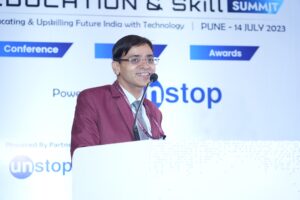
Dr Buddha Chandrasekhar, Chief Coordinating Officer (AICTE), Ministry of Education, GoI advocated offering the students appropriate internship opportunities so that they get exposure of working real time on projects. This can help them build real-time industrial skills by the time they get out of colleges. Illustrated with the example of how a German company were developing an airplane engine and how its digital twin was shared with students here. The students fine tuned the digital twin and remodeled the wiring. The scientists working physically in Germany were amazed at what the students were able to do here.
Chandrasekhar also advised on democratizing education and invoked educators to move out of campuses to the nearest slums and villages and leverage their problem solving capabilities. The educational institutions should more play the role of incubation of knowledge centers.
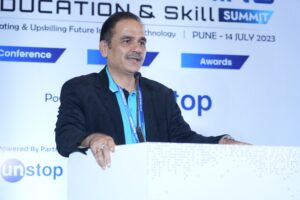
“We are trying to bring the liberal arts framework in education into professional education,” informed Sanjay Padode, President & Chancellor, Vijaybhoomi University as he outlined the mission to set up India’s first liberal arts professional university. With today’s problems mostly becoming trans-disciplinary, it is perhaps time to innovate on inter-disciplinary courses and learning.
In Padode’s opinion, the NEP aims to do what the government did in 1991 before liberalization of the economy. “So the NEP practically liberalizes education and you can come up with innovative ideas leveraging on technology,” concluded Padode.
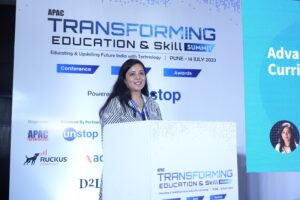
There are about 12 crore registered learners on the Coursera platform and about 7000 institutions who leverage the platform to bring learning to the students in the workforce, informed Prashasti Rastogi, Director, Coursera for Camps. With lots of high skill jobs involving patterns and decision making also facing the risk of automation, it is time to acquire newer and relevant skills and much of it can be done online today with all the technologies, she added.
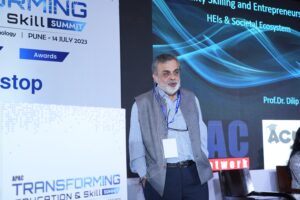
Dr Dilip Nandkeolyar, Co-Vice Chancellor at Commonwealth University, London advocated modifications on the policy level to incorporate proper social engineering measures in academic curricula. “It is time to train an entrepreneur and not a job seeker and for that collaboration between disciplines as well as between industry and academia is a must,” added Nandkeolyar .
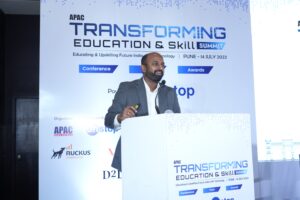
Anup Menon, Account Director & Regional Head—Academics & Government, LinkedIn informed that in the next 25 years, with more than 180 crore members coming into the Indian workforce it is perhaps time to gear up. While a student entering the corporate world from the academia expects to start earning, the corporate mulls over the expenses it has to incur to make the student industry ready. It is perhaps time to stop this dichotomy, advises Menon.
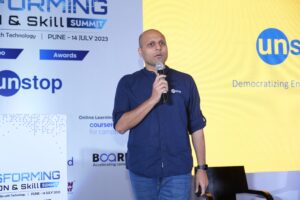
Ankit Aggarwal, Founder & CEO, Unstop also advocated democratization of learning especially in terms of gender parity. He suggested not restricting to limited number of institutions but reach out to others too beyond this limit in search of adding to the female workforce. With Pune earning the moniker of Oxford of the East long back, an esoteric set of panelists discussed measures on how Pune and Maharashtra overall plans to consolidate its position as the hub of higher education.
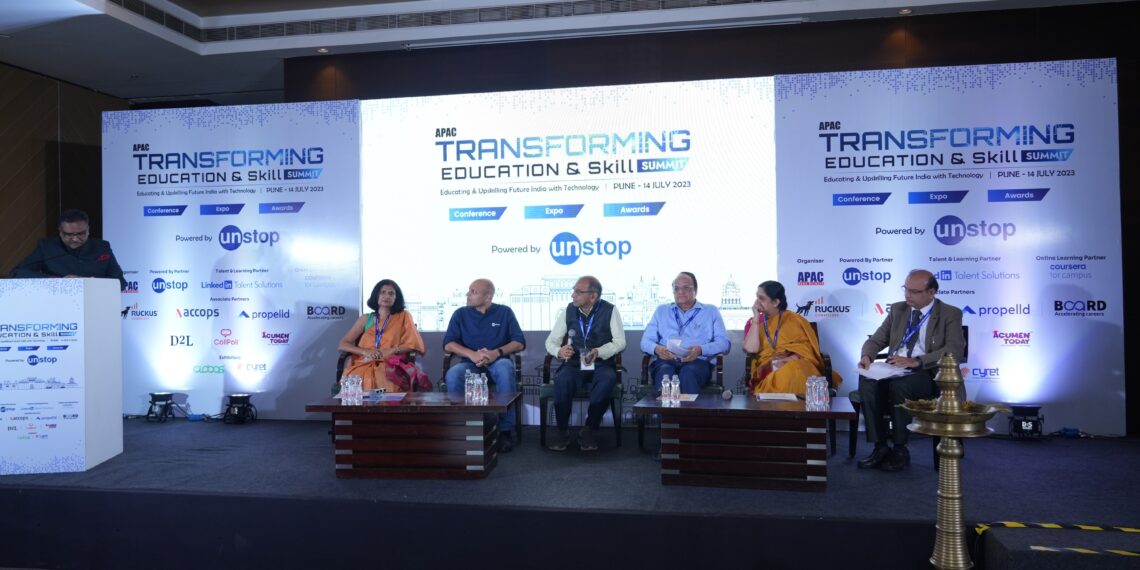
The panelists included Prof Prabhat Ranjan, VC, D Y Patil International University, Prof V N Rajasekharan Pillai, VC, Somaiya Vidyavihar University, Dr Sayalee Gankar, VC, D Y Patil University Pune, Dr Nitin Joshi, Director Dr VN Bedekar Institute of Management Studies, Adya Sharma, Director, Symbiosis Centre for Management Studies, Symbiosis International University, Dr Asmita Chitnis, Professor & Director, Symbiosis Institute of International Business and Ankit Aggarwal, Founder & CEO, Unstop.
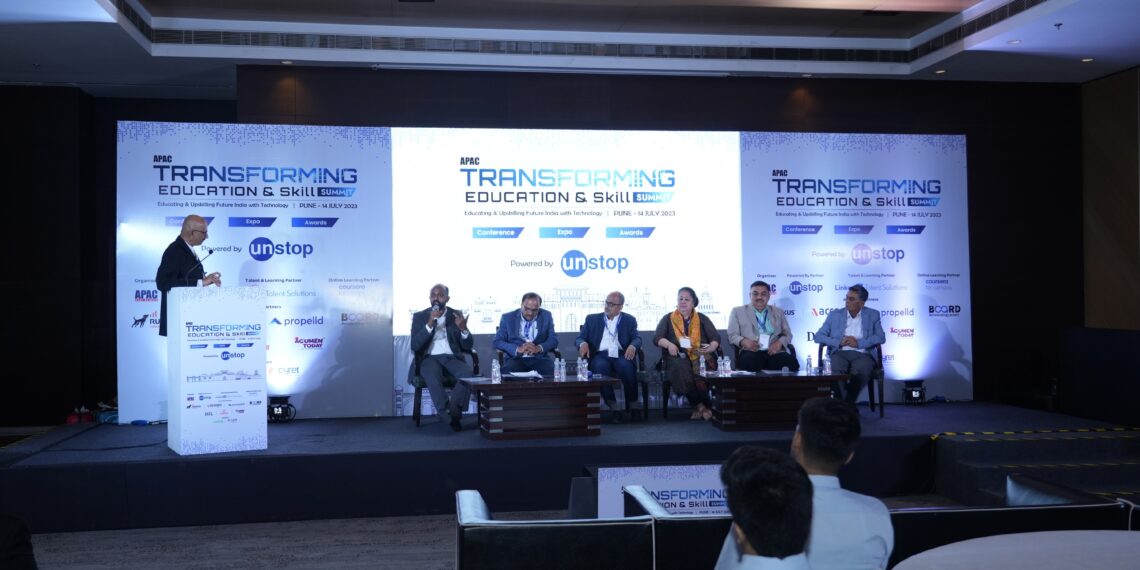
With NEP implantation bagging all the eyeballs, another lively panel discussion deliberated on the challenges for academic institutions in implementing NEP provisions. Dr. Anant Chakradeo, Pro Vice Chancellor, MIT Art Design & Technology University, Jitendra Patil, Director, Universal College of Engineering, Prof Manoj S Khaladkar, Training & Placement Officer, Army Institute of Technology, Deepa Dixit, Senior Associate Dean- Accreditation, We School, Welingkar Institute of Management Development & Research, Veteran Wing Commander Sudhir Salunkhe, Former Dean at iFEEL – Institute for Future Education Entrepreneurship and Leadership as well as Anup Menon, Account Director & Regional Head – Academics & Government, Linkedin were the participants.
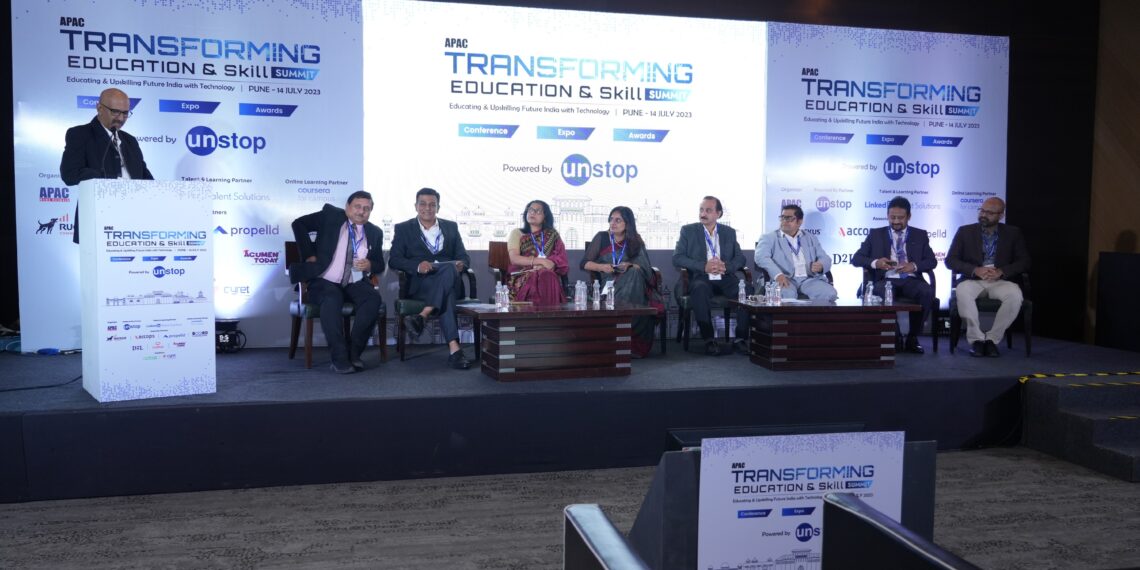
Sandip Sane, Director, ASMs IBMR, Dr. Lakshmi Mohan, Director, ITM Business School, Dr. Ganesh Rao, Director, Pune Business School, Nirpuma Kocherlakota, Associate Director, MIT World Peace University, Dr. Prashant Gundawar, Director Sterling Institute of Management Studies, Nikunj Doshi, Chief Business Officer, Propelld and Kunal Deep, Vice President, CollPol discussed the various facets of tech-led innovations in admission, enrolment, assessment and accreditation processes of academic institutions.