






















Chennai: The Centre of Excellence for Road Safety (CoERS) at the Indian Institute of Technology Madras (IIT Madras) has launched the Data Driven Hyperlocal Intervention (DDHI) programme, aiming to tackle India’s increasing road accident rates.
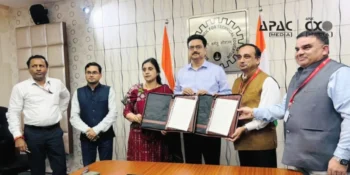
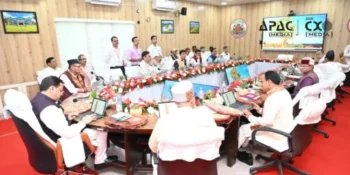
The project, undertaken in collaboration with the Ministry of Road Transport and Highways (MoRTH), was officially launched at an alignment session held in Vigyan Bhawan, New Delhi, with participation from central and state government leaders and district officials.
100 High-Risk Districts Identified for Action
The DDHI program focuses on 100 districts across 17 states identified as having the highest accident burdens in India. These areas were selected based on an in-depth analysis of national crash data. According to MoRTH’s Road Accidents in India 2022 report, India recorded 4,61,312 road accidents, resulting in 1,68,491 deaths and 4,43,366 injuries. While human error remains a dominant cause, many incidents are also driven by localised infrastructural and behavioural challenges.
The DDHI initiative adopts a hyper-local, district-specific approach, aligning interventions with CoERS’s 5E model of road safety – Engineering, Enforcement, Education, Emergency Care, and Empathy.
Bottom-Up, Community-Driven Model
Unlike traditional top-down strategies, DDHI promotes a bottom-up governance structure. District-level Road Safety Councils (DRSCs), chaired by respective district leaders, will spearhead the interventions. These councils will be empowered to identify the root causes of accidents in their areas and implement targeted, practical solutions.
The initiative is supported by data from the electronic Detailed Accident Report (eDAR) system—formerly iRAD—and Sanjaya, an advanced location intelligence platform developed with MoRTH and inaugurated by Union Minister for Road Transport and Highways Nitin Gadkari.
Core Objectives of DDHI
The program seeks to:
- Build local capacity in selected districts for road safety planning
- Empower district leadership to make evidence-backed decisions
- Develop sustainable, low-cost, high-impact interventions
- Enable scientific review and assessment of intervention outcomes
- Create a knowledge base of replicable best practices for nationwide adoption
Technology Tools and Frameworks for Districts
To aid local implementation, CoERS will equip DRSCs with innovative tools:
- Sanjaya Dashboard: A data-driven crash mapping and planning platform.
- Field Perception Survey (FPS): A grassroots mobile app for gathering local road safety concerns.
- Trauma Care Preparedness Level (TPL): A digital tool to assess and enhance district-level emergency response capabilities.
A district-level operations task force will also be formed in each of the 100 districts to oversee data collection, coordinate with enforcement and engineering teams, and monitor project execution. By decentralising decision-making and placing power in the hands of local leadership, IIT Madras and MoRTH aim to drastically reduce fatalities and injuries through targeted, data-informed solutions.
The DDHI programme is poised to become a national model for effective road safety governance—driven by data, shaped by communities, and led by science.