


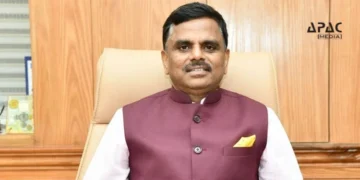



















SGT University is going beyond traditional classrooms to prepare the students to navigate a fast-evolving global market. Prof. (Dr.) Hemant Verma, VC, SGT University speaks to APAC Media how along with disciplinary excellence, they are trying to make the student a skill-ready, technologically fluent and socially responsible citizen.
How does SGT University ensure its multidisciplinary programs across engineering, medical, management, and sciences are aligned with industry needs and help students develop industry-relevant skills?
SGT University (SGTU) is a multidisciplinary institution comprising 19 Schools and Faculties, serving a vibrant academic community of over 10,000 students and more than 900 faculty members, ensuring an excellent student–teacher ratio. The University holds an A+ NAAC accreditation and received the NEP-2020 Implementation Excellence Award 2025 from the Haryana State Education Council.
SGTU offers interdisciplinary programs across engineering, medicine, management, and sciences, designed through a structured, industry-centric framework aligned with societal and workforce needs. Curricula are continuously updated in collaboration with employers, academic experts, industry leaders, and regulatory bodies, with a strong focus on outcome-based education and fully continuous evaluation.
Every program is benchmarked against premier national and international institutions and complies with regulatory approvals from organisations such as the NMC, INC, and RCI. Each school and faculty is governed by an Industry Advisory Board (IAB) that aids in curriculum development, placement possibilities, and technology transfer.
There is a pronounced emphasis on experiential learning through clinical exposure, simulation-based training at the National Reference Simulation Centre (NRSC), SGT Cobotics lab, modern engineering laboratories, applied research, compulsory internships, field visits, live projects, and ongoing industry collaboration to enhance employability and research outcomes.
How is the university integrating AI, data science, and other emerging technologies into its curriculum to equip students with future-ready technical skills?
SGT University has set up a dedicated Center of Excellence in Artificial Intelligence (AI) to carefully include AI to teaching, research, and the development of new courses. The Center supports high-impact interdisciplinary projects like using AI to predict health conditions based on diagnostic data, using AI to recommend crops for sustainable agriculture, using deep learning on MRI images to automatically find brain tumours, and using AI-IoT to monitor breathing without contact using LiDAR and mmWave radar. These hands-on projects actively include students from engineering, science, management, and medicine, encouraging creativity and collaboration across disciplines.
The University has a modern, technology-based academic framework that includes AI, data science, and new technologies in all of its degrees. A hybrid pedagogy combines strong theoretical ideas with real-world learning using smart labs, advanced computing infrastructure, and platforms that are in line with Industry 4.0. Interdisciplinary projects, problem-based learning, and AI-driven academic frameworks all help with customised learning, getting a job, and getting students involved.
How do industry partnerships and collaborations at SGT University provide practical exposure and prepare students for real-world challenges?
At SGT University, industry collaboration is deeply embedded, bridging academic learning with real-world professional demands. A strong Industry Advisory Board plays a pivotal role in curriculum design, periodic review, and the advancement of industry-relevant academic activities, ensuring that programmes remain aligned with evolving sectoral needs, emerging technologies, and regulatory frameworks.
The University collaborates with leading hospitals, corporates, law firms, media organisations, NGOs, and research institutions to provide hands-on exposure through internships, clinical postings, fieldwork, live projects, consultancy assignments, and on-site training, with academic credits awarded in accordance with NEP 2020.
Continuous engagement with industry experts through guest lectures, workshops, seminars, bootcamps, and mentorship enriches classroom learning while strengthening students’ problem-solving, teamwork, ethical reasoning, and adaptability. Industry-aligned courses, joint research initiatives, innovation centres, startup incubators, and entrepreneurship programmes further enhance employability and leadership skills, supported by the Centre for Career Advancement, which focuses on communication skills, professional grooming, and holistic career readiness.
How does the university foster research, innovation, and entrepreneurial skills among students through its academic and institutional initiatives?
At SGT University, research, innovation, and entrepreneurship are integral to the academic ecosystem, supported through platforms such as the Atal Community Innovation Centre (ACIC), Institution’s Innovation Council (IIC), and the Entrepreneurship Development Cell (EDC). These centres promote a research-oriented culture at both UG and PG levels through hackathons, ideathons, design-thinking initiatives, and industry-linked problem-solving, backed by mentorship, seed funding, pitching support, and IP guidance.
At the UG level, research is embedded through problem identification, literature reviews, case studies, mini-projects, and field-based inquiries, all aligned with the Continuous Assessment framework. Ongoing evaluation through assignments, presentations, project reports, and reflective journals ensures research-based learning beyond end-term examinations. At the PG level, research is strengthened through advanced project work, dissertation-based learning, interdisciplinary collaboration, and publication-oriented outputs, with Continuous Assessment evaluating research proposals, progress reviews, data analysis, and research presentations.
This ecosystem is further reinforced by Synergy, the University’s flagship techno-academic festival. Synergy 2025 showcased 239 student projects, supported by Rs 36 lakhs in seed funding and Rs 15,56,140 in intramural research grants, translating academic research into functional prototypes.
Building on this momentum, Synergy 2.0 (Gyanotsav–2026) will highlight faculty-led interdisciplinary research involving PG and PhD scholars, alumni engagement, strengthened industry MoUs, and SDG alignment, reaffirming SGT University’s commitment to research as an integral, continuously assessed component of teaching-learning at all levels.
How does SGT University ensure students gain global perspectives and cross-border exposure to complement their academic learning?
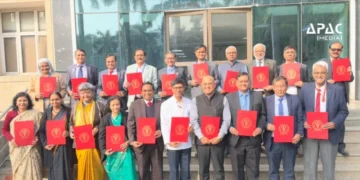
The university has established 19 strategic partnerships with internationally reputed institutions to offer robust student exchange and global immersion programs. Most notably, with the University of York, University of Kent, Utah Tech University, Keele University and American University (Dubai). Our Asia-Pacific and African ties with Manipal University College (Malaysia), Nyarkotey University College of Holistic Medicine & Technology (Ghana), and the Kattakurgan Branch of Samarkand State University provide students with truly diverse international exposure.
The university has also opened inbound global immersions from 2026 in 4 academic fields: Ayurveda, Pharmacy, Nursing, and Psychology. Beyond formal exchanges, we offer internship and scholarship opportunities in countries such as the Netherlands and Denmark, providing professional exposure to complement academic study. Our global connect initiative includes cross-border cultural exchange activities, such as our volleyball team competing in the upcoming mini Volleyball tournament in Russia in February 2026, which builds collaboration and cultural sensitivity beyond the classroom.
Equally importantly, we bring the best global pedagogical practices to students on campus by hosting visiting faculty from the University of Kent, the University of Sydney, the Casa Pantha Institute in Spain, Canterbury Technical Institute, etc., drawing on their expertise.
Complementing this, our Centre of Excellence for Andragogical and Pedagogical Sciences (CEAPS) has led internationally benchmarked faculty development initiatives. In 2024, CEAPS collaborated with Skills and Education Group (SEG), UK, for a three-month program titled “Innovative Teaching, Learning, and Assessment Strategies,” which included a 9-day immersion for five SGT faculty members at King’s College and Leicester College, where they studied assessment and facilitation techniques. The program cascaded into an institution-wide program on “Facilitation and Andragogic Techniques” covering all 900+ SGTU teaching faculty, ensuring that the whole institutional culture, classroom and beyond, could be vitalised. The centre plans to organise a workshop in collaboration with the University of Delaware in February 2026 to further internationalise the university’s pedagogical exposure.
What strategic steps is SGT University taking to prepare students for future careers in a rapidly evolving, technology-driven global environment, including areas like sustainability and digital transformation?
SGT University recognises the need to embed real-world industry skills and exposure to social systems for its students, going beyond traditional classrooms to prepare them to navigate a fast-evolving global market. Along with disciplinary excellence, the student is made skill-ready, technologically fluent and socially responsible citizen.
On the skills and industry-readiness front, Mission Arjun, a flagship six-month structured program aimed at maximising placement potential of the top 400-500 meritorious students across disciplines, incorporates discipline-specific workshops and industry-recognised tool certifications such as AutoCAD, MATLAB, AI/ML, IoT integration, and emerging areas like EV systems. These efforts are complemented by a dedicated team of trainers who offer personalised, need-based training modules for all students.
Digital tools and sustainable social innovations are not peripheral to the student’s life at SGT University; they are central to it, ensuring that students don’t just learn about digital transformation but practice it in real-time. The 8th Ideathon 2025 brought together 75+ student projects across agriculture, healthcare, green and clean energy, IoT, and social innovation. Our Institution’s Innovation Council (IIC) was nominated as the nodal centre by the Ministry of Education and organised the AICTE-sponsored Innovation, Design & Entrepreneurship (IDE) Bootcamp in December 2025 that focused on human-centric technological innovations.
Looking ahead, we plan to send 60 students as ATL Sarthi interns to the Atal Innovation Mission (AIM) at NITI Aayog. These students shall undertake a structured internship and support capacity-building activities for Atal Tinkering Labs.
Our cohort of 63 academic clubs across disciplines and 20 vibrant creative clubs (dance, theatre, photography, filmmaking, music, public awareness, community service, storytelling, art and craft, etc.) offers practical exposure beyond students’ regular curriculum.
We recognise that sustainability is an emerging 21st-century expertise and career differentiator; hence, EV systems, green energy, and environmental sciences are embedded in the curriculum and student projects. An eclectic academic mix of value-added and multidisciplinary courses is offered to bridge the gap between the curriculum and society, covering topics such as Happiness and Wellbeing, Environmental Science, and more.
Ability- and skill-enhancement courses further cultivate students’ abilities and skill sets during their formative years. The university also offers its students professional exposure through institutional internship opportunities across departments such as HR, digital marketing, and mass communication. The Student Ambassador Program, launched in 2025 with 70 ambassadors, fosters leadership and organisational skills to bridge communication between students and the administration.
To create meaningful social impact, Samajik Vikas SGT ka Prayas (SVSP) brings together students and faculty members alike to empower surrounding villages by promoting sustainable development, focusing on education, health, and skill enhancement. Last year alone, over 5500 participants were engaged in various outreach activities, ensuring that the students’ education is not divorced from real-world needs and remains socially impactful.
In addition to these steps, the whole aforementioned ecosystem comprising of state-of-the-art labs, smart classrooms, Centres of Excellence (AI, Science of Happiness, Andragogical and Pedagogical Sciences etc.), entrepreneurship support through Atal Community Innovation Centre (ACIC), the Entrepreneurship Development Cell (EDC), intramural funding for student-led projects in Synergy tech fest, 100 per cent continuous assessments and integration of AI and virtual tools in pedagogy come together to provide an utmost nurturing environment for socially-responsible student innovation that keeps up with contemporary world.





Discussion about this post