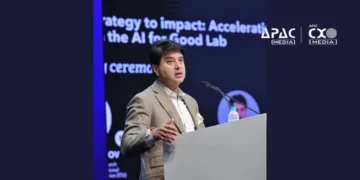























Mumbai: Minimising variability in medical interventions can lead to standardised protocols that contribute to a more reliable and equitable patient experience, fostering higher quality and reliability in healthcare services. During the APAC 8th HealthTech Innovation Conclave, Santosh Marathe Regional CEO – Western Region, Apollo Hospitals, described how technology can help build a more resilient and sustainable healthcare ecosystem. Let’s take a look.
Contactless solutions in healthcare
Contactless solutions in healthcare have become increasingly important, especially in the context of infection control and the ongoing COVID-19 pandemic. These solutions aim to minimise physical contact between patients, healthcare providers, and medical devices. Here are some contactless solutions used in healthcare:
- Virtual consultations for remote patient-doctor communication.
- Mobile Health (mHealth) apps for scheduling, accessing medical records, and communication.
- Digital health records to replace physical paperwork.
- Contactless check-in systems and kiosks for appointments.
- Remote monitoring devices for real-time health data.
- Digital platforms for prescription renewals and reminders.
- Robotic Process Automation (RPA) of administrative tasks for efficiency.
- Biometric Identification for patient identification.
- IoT-enabled Devices for remote health monitoring.
- Contactless Payments for healthcare transactions.
- AI-driven Chatbots for basic consultations and information.
- Voice-activated assistants for hands-free healthcare tasks.
“One of the larger advantages for a group like Apollo with 77 hospitals is it gives access to all our clinics across the spectrum. So anybody sitting in Chennai can have access to the most experienced consultant sitting out of Delhi,” Marathe said while talking about the different ways Apollo’s hospital chain has adapted with digital measures for better patient care.
Handing over the power to the patients with EHRs
A single, unified medical record, often in the form of an Electronic Health Record (EHR), offers several advantages in healthcare. It consolidates comprehensive patient information, promoting seamless coordination of care among healthcare professionals and enhancing patient safety by reducing errors.
Efficient electronic access to records enables quick information retrieval, empowering patients to engage in their healthcare. The standardised documentation in EHRs ensures consistency, contributes to cost savings, and facilitates regulatory compliance. Additionally, EHRs support interoperability, allowing secure data exchange between healthcare systems, fostering research, and aiding population health management.
Behavioural clustering for individual tailor-made services
Behavioural clustering in healthcare involves grouping individuals with similar health-related behaviours into distinct clusters or categories. This approach is often used in data analysis and healthcare research to identify patterns, trends, and commonalities among populations based on their behaviours.
By understanding behavioural clusters, healthcare professionals and researchers can tailor interventions, preventive strategies, and health promotion efforts to specific groups, ultimately improving outcomes and optimising resource allocation.
Behavioural clustering may involve analysing various aspects, such as lifestyle choices, health habits, adherence to medical recommendations, and engagement with healthcare services. The insights gained from behavioural clustering can inform personalised care plans, targeted health education campaigns, and more effective strategies for managing and preventing health issues within specific population subgroups.
Building a resilient and sustainable healthcare infrastructure for the future
Marathe strongly believes that the integration of IT in healthcare can help build a resilient and sustainable healthcare infrastructure in India. The integration of IT in healthcare, including Electronic Health Records (EHRs), telehealth, data analytics, and artificial intelligence, can streamline data access, enhance communication among healthcare providers, and enable virtual consultations, bringing healthcare to remote areas.
Mobile health apps and remote monitoring devices empower individuals to actively manage their health, while AI applications contribute to accurate diagnostics. Patient portals and blockchain technology support secure data access, and robotic process automation reduces administrative burdens. Cybersecurity measures are critical to protect patient data. “IT definitely will standardise and reduce the variability in healthcare,” he said.
Health insurance penetration is another factor that Marathe believes can offer a multitude of benefits. It provides financial protection for individuals, alleviating the burden of unexpected medical expenses and encouraging timely access to care and preventive services. Insured individuals receive support for chronic disease management and find prescription medications more affordable.
Health insurance enhances the overall financial stability of healthcare providers and spreads financial risks across a larger population through risk pooling. This results in improved community health, reduced emergency room visits, and increased economic productivity as a healthier workforce contributes to a more productive society.