























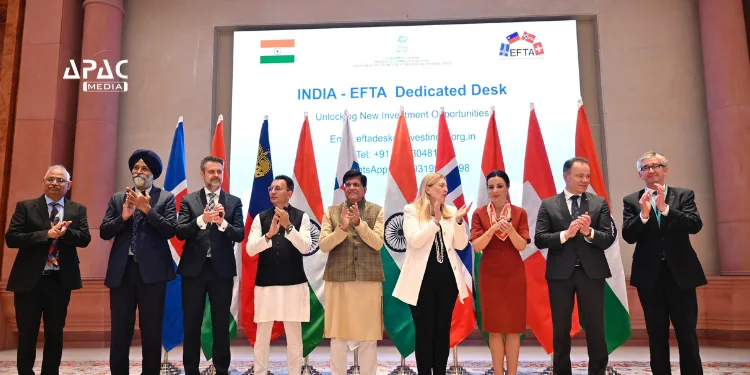
New Delhi: To boost economic ties with Europe, India has launched a dedicated desk to facilitate trade and investment with the European Free Trade Association (EFTA) countries—Switzerland, Norway, Iceland, and Liechtenstein.
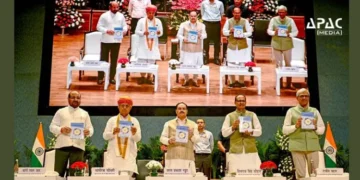
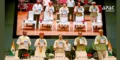
Union Minister for Commerce and Industry Piyush Goyal formally inaugurated the EFTA Desk at Bharat Mandapam, New Delhi, in the presence of senior EFTA representatives and Indian officials.
The initiative comes as part of the India-EFTA Trade and Economic Partnership Agreement (TEPA), signed on 10 March 2024. Designed to be a central resource for businesses, the desk will provide regulatory guidance, investment insights, and business matchmaking services to help EFTA companies navigate the Indian market.
It aims to ensure seamless capital flow, resolve investor concerns, and create a comprehensive database of investment opportunities.
India-EFTA Trade Ties Strengthen
While TEPA has yet to be fully implemented, businesses from the four EFTA nations are actively preparing for expanded trade conditions. Over 100 EFTA companies are currently in India exploring investment avenues, aligning with the TEPA’s ambitious goal of generating $100 billion in investment and creating one million jobs in India over the next 15-20 years.
Terming the launch of the EFTA Desk as a “defining moment,” Minister Goyal emphasized its role in enhancing ease of doing business. “This initiative will help investors navigate concerns, enable the smooth flow of capital, and promote India as a key trade partner for EFTA countries,” Goyal said.
Delighted to launch the India-EFTA Dedicated Desk that will cut across all ministries in the central government and draw resources from the state governments to catalyse the $100 Bn investments.
The desk aims to fast-track the processes, make it easier to do business, ensure a… pic.twitter.com/D5sxDX7gpx
— Piyush Goyal (@PiyushGoyal) February 10, 2025
EFTA Leaders Welcome the Move
The launch received strong support from top EFTA representatives. Norwegian Deputy Minister of Trade, Industry, and Fisheries Tomas Norvoll highlighted the desk’s role in assisting Norwegian firms entering the Indian market. “It marks a significant milestone in simplifying business operations between our countries,” he noted.
Iceland’s Permanent Secretary of State Martin Eyjolfsson emphasized collaboration in renewable energy and fisheries, calling the desk a “crucial step” in expanding economic ties.
Similarly, Liechtenstein’s Minister of Foreign Affairs Dominique Hasler stressed that while Liechtenstein is small in size, its contributions to India’s infrastructure, manufacturing, and technology sectors would be substantial.
Swiss State Secretary for Economic Affairs Helene Budliger Artieda praised the initiative, stating, “The presence of numerous EFTA businesses in Delhi today showcases that the TEPA is more than just a trade agreement—it is a commitment to a long-term economic partnership.”
Co-launched the India-EFTA Desk with @SECO_CH Ms. Helene Budliger Artieda, Mr. Tomas Norvoll, State Secretary of Trade & Industry, Norway, Mr. Martin Eyjolfsson, Permanent Secretary of State, Iceland, Ms. Dominique Hasler, Minister of Foreign Affairs, Education & Sports,… pic.twitter.com/MqdfKyImo3
— Piyush Goyal (@PiyushGoyal) February 10, 2025
EFTA-India Business Roundtable and Future Prospects
Following the inauguration, an EFTA-India Business Roundtable convened, drawing participation from over 100 firms. Discussions covered key sectors such as pharmaceuticals, financial services, engineering, energy, seafood, food processing, and agritech.
The roundtable provided a structured forum for exploring joint ventures, trade expansion, and technological collaborations under the TEPA framework.
Under TEPA, EFTA has committed substantial tariff concessions, covering 99.6 per cent of India’s exports to the region, with full market access for non-agricultural products and reduced tariffs on processed agricultural goods. In return, India has extended tariff concessions covering 95.3 per cent of EFTA exports, with gold imports playing a major role in trade discussions.
However, sensitive sectors such as dairy, coal, soya, and processed food remain excluded from tariff reductions.
As India and EFTA nations deepen their engagement, the EFTA Desk is expected to be a game-changer in enhancing economic cooperation. With a shared vision of growth, innovation, and investment, the desk will serve as a crucial platform for advancing India’s global trade ambitions.
Also read –
India to Take Center Stage as Co-Chair at AI Action Summit in Paris













Discussion about this post