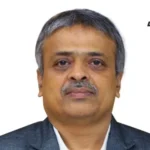
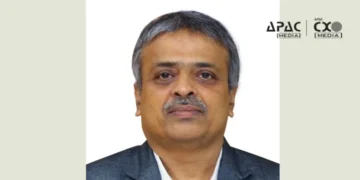



















Focusing on India’s scientific ambitions under the banner of Viksit Bharat@2047, the Department of Science and Technology (DST) is playing a pivotal role in shaping the country’s scientific and innovation landscape. In a wide-ranging and exclusive conversation for the APAC Media’s “Good Governance” series, A. Dhanalakshmi, Joint Secretary, Administration, Department of Science and Technology (DST), Union Ministry of Science and Technology, laid out an expansive and nuanced roadmap.
In this exclusive interview with Bhaswati Guha Majudmer, Senior Correspondent, she shared a forward-looking vision anchored in three national priorities — security, sustainability and climate resilience — while outlining the transformative initiatives driving a tech-powered future.
“Viksit Bharat by 2047 is a major goal. And not just for DST, but all scientific ministries. We are preparing to address the major problems the country will face in 2047,” stated A. Dhanalakshmi.
She elaborated that the first ‘bucket’ of national priorities is security. She highlighted the fact that security means protecting the sovereignty of our country and stated that “today battles aren’t fought in fields. They are fought with technology.” So border security, cybersecurity — all of that now needs AI and emerging technologies.
The second priority, she said, is sustainability. “Whether it is agriculture, supercomputing or quantum, we must become self-sufficient. For instance, a mathematical model predicts that by 2047, India may not be able to produce enough milk for its population. We can’t just increase cattle; we won’t have enough land. So we are working on biotech solutions, sustainable food production methods and substitutes.”
The third and equally urgent concern is climate change. “Unprecedented rains, droughts, floods, they’re becoming more common. We must have systems in place by 2047 for early warnings for earthquakes, floods, or other natural calamities,” she said. Highlighting initiatives such as the National Green Hydrogen Mission and innovations for EV battery disposal, she added, “We are developing technologies to ensure carbon deficiency and environmental sustainability are addressed.”
Later, while speaking about India’s talent pool, A. Dhanalakshmi said that despite being the third-highest in research paper publications globally, India faces a gaping disconnect between lab-based innovations and real-world applications.
“All this innovation doesn’t get translated into the field. There’s a wide gap and we need to acknowledge it” she noted. But DST is actively working to change this scenario. “From 25,000 startups a decade ago, we now have 1.35 lakh startups, many of which were funded by DST,” she said. Under the National Mission on Interdisciplinary Cyber-Physical Systems (NM-ICPS), DST has set up 25 Technology Innovation Hubs across the country.
She cited success stories like IIT Bombay’s BharatGPT, IIT Indore’s AI-powered medical tools and a low-cost heart valve developed by SCTIMST in Thiruvananthapuram. “All of these are accessible technologies – the technology which was invented in the lab for the people,” she noted, adding that IIT Tirupati, IIT Kanpur and IIT Hyderabad have also developed critical technologies ranging from accident-aversion systems to anti-pollution vehicles.
To scale this further, DST is launching a hub-and-spoke model, where premier institutes mentor Tier-2 universities and colleges.
“These 25 hubs can’t serve the whole country, so we are now going beyond IITs and NITs to take this to every corner of India,” she added.
Another major reform she spoke about was the integration of various schemes into one umbrella called “Vigyan Dhara.” It includes three verticals: capacity building, R&D infrastructure and startup innovation.
The three verticals under the Vigyan Dhara umbrella scheme mentioned in the document are:
- Capacity Building:
This vertical focuses on motivating and supporting scientific talent across the country. It includes scholarships, especially for students interested in STEM (Science, Technology, Engineering and Mathematics), as well as funding for post-doctoral research and training programs. The goal is to build a strong and skilled human resource base in science and technology. - Research and Development (R&D):
This supports high-end scientific research by enabling access to expensive instruments and infrastructure. DST has created a centralised system where researchers can book time slots to use such equipment. Grants are also provided to maintain and upgrade research instruments. It includes support for geospatial research through the National Geospatial Programme. - Innovation and Startup Support:
The support for innovation and technology translation, such as through the National Initiative for Developing and Harnessing Innovations (NIDHI), Technology Translation and Innovation (TTI) division and schemes to boost deep tech startups. This vertical is designed to convert lab research into field-ready, scalable technologies and foster entrepreneurship.
Speaking about the overcrowded service-sector startups, A. Dhanalakshmi said: “70 per cent of our startups are in the service sector. But that’s not enough. If we want to become ‘Vishwaguru’, we need deep tech startups, which will place our country much higher in the overall ranking of innovations”
The government has launched the Research Development and Innovation (RDI) Fund, which she described as a safety net for high-risk ventures.
“These startups have long gestation periods and higher chances of failure, compared to service-sector startups,” she mentioned, adding that once the startup becomes successful, the government may recover the RDI fund through equity. But until then, the startup should focus entirely on developing its technology, not worry about funding. This is the core principle of the RDI fund.
On women in STEM, she said 21 per cent of DST’s extramural R&D funding already goes to women. “Within Vigyan Dhara, we ensure 40 per cent of capacity-building programs are exclusively for women scientists,” she said. Schemes like WISE-KIRAN and Vigyan Vidushi focus on women who’ve taken career breaks. “We train them in IPR registration or help them re-enter post-doc research. Those who’ve taken breaks for family reasons are getting a second chance,” she said.
She also spoke about the growing participation of women in STEM. “More girls are now in medical and engineering colleges. In DST, we have more women scientists than men. That mindset shift is one of our greatest achievements.”
The INSPIRE-MANAK program has become a flagship for attracting young talent. “We reached eight lakh school students across the country. Their ideas go through the district, state and national levels. Last year, 50 of them went to the US, and 13 won international awards.”
Turning to global cooperation, A. Dhanalakshmi proudly listed India’s growing portfolio of international science alliances. “We have bilateral programs with the US, Germany, France, Japan and even multilateral ones like with BRICS, ASEAN and with the EU. The Sakura Science Program with Japan brings their students here and sends ours there. We also have Scientific Attachés (a scientist or engineer appointed by the DST, to work in abroad, to foster international scientific and technological cooperation and promote scientific interests on a global stage) in six countries and are adding more.”
On India’s digital success story, she said: “At the G20 in Brazil, developing nations like Indonesia and Brazil asked us for guidance on DPI and UPI infrastructure. That shows how much the world respects our scientific capabilities.”
She concluded with a powerful message about reverse brain drain. “Our VAIBHAV Fellowship is attracting Indian-origin scientists back from other countries. This is not just brain gain. It’s a welcome-back movement.”
She explained that VAIBHAV is aimed at attracting Indian-origin scientists, PhDs and innovators who have migrated to countries like the US and UK back to India. Under this “brain drain” initiative, 28 scholars have already been selected to collaborate with Indian universities for periods ranging from six months to two years.
The program offers opportunities and incentives for these experts to contribute to India’s research ecosystem. DST is also working on a new scheme to offer post-doctoral fellowships for those looking to return from abroad.
From deep tech innovation to global collaborations and women-led research, the exclusive conversation with A. Dhanalakshmi has highlighted DST’s focused push toward a self-reliant, future-ready India.