













Introduction: With the rapidly depleting groundwater table, NGT has passed orders for strong regulations on effective usage of groundwater especially targeting bulk water users such as industrial, commercial and bulk housing. After much discussion, Central Ground Water Authority (CGWA) released a gazette notification on 24-Sep-2020 with guidelines for groundwater extraction for industrial and infrastructure projects. Though the guidelines exempted projects drawing less than 10KLD from taking an NOC, there has been increasing pressure on CGWA not to dilute the regulations.
 The current guidelines clearly indicate the regulations are going towards efficient and sustainable usage of groundwater for commercial purposes. Some of the outstanding moves in the current guidelines are 1) Annual Water Auditing for industries consuming more than 100KLD 2) Industries have to adopt suitable methods to reduce water consumption by 20% in 3 years 3) Installation of tamper proof flow meters with telemetry at groundwater abstraction structures 4) Hydrogeological and impact assessment report have to be submitted for projects drawing more than 100KLD in OCS areas.
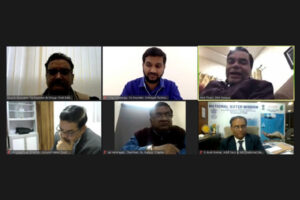
As the guidelines are getting stringent the industries are facing challenges to accommodate them and the gap is increasing on the technical know-how on implementing the guidelines. Through this 3 webinar series, we intend to bring together the regulatory authorities, industries and technology providers to brainstorm the challenges faced and how all stakeholders can collaborate to ensure efficient and sustainable use of precious groundwater resources.
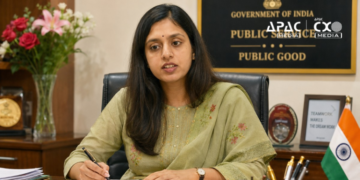
G Asok Kumar, IAS, Additional Secretary & Mission Director, National Water Mission, Ministry of Jal Shakti, Government of India
 New Delhi: Ground water management is one the important aspects for effective water resource management. We have been extracting groundwater much more compared to what we are using. In India, extraction of groundwater is quite high compared to groundwater extraction in the US and China combined. But somehow groundwater management was not given that much importance. But now the Central Ground Water Authority (CGWA) has come up with a set of new guidelines which will be of help for effective usage of groundwater. That is why also, the National Water Mission focuses on auditing of water. Specially for the industrial sector. Industry will have some apprehension but we have to convince them for effective usage of groundwater and encourage using technology and innovation for the same.
What is measured can only be monitored. I have been supporting the continuous measurement of water flow just to keep the data. There is an apprehension that the government would charge for the water but what is more important is we need to have knowledge of how much water is being used. To have the idea of total water used, we need to meter our water sources, it is very essential. There should be no human intervention anywhere in the meter reading to online data collection. The meter data should be transmitted to an online cloud server automatically using cellular network based telemetry. The entire process of centralised data collection should be tamperproof.
Vinay Chatarju, Co-founder & Head-Business, Kritsnam Technologies
 New Delhi: The first thing to address while talking about groundwater management is measurement. Speaking from our experience of working with various industries and government departments, water management in India has been mostly a guesswork based on outdated heuristics. Water users and regulators are just realizing the importance of data driven water management and are on the right path in the last few years. The new guidelines from CGWA emphasize the sustainable usage of freshwater for industrial and commercial purposes. Reduction in groundwater consumption is the need of the hour and the recent guidelines by CGWA is a very important step in that direction.
Groundwater is a complex subject technology penetration in this field has been limited so far. We, at Kritsnam Technologies, are working with bulk water users – be it industry, commercial establishments, by leveraging advanced technologies (IoT, ML, AI) to help them reduce their water footprint. Using various IoT enabled instrumentation and hydraulic models we help water users to efficiently manage the resource in their premises. It is fairly possible to reduce the water consumption by up to 20% just by establishing monitoring units and disciplined usage of water in the industries.
 Many manufacturers/industries don’t have the information they need to manage the water that flows through their processes—information that is critical for improving productivity. Kritsnam has developed products that can help these industrial companies improve the way they track their water usage and monitor their progress. We recommend industries to set up a Continuous Internal Water Audit system to have a clear idea on how much water is being used and which processes are working inefficiently. By organically bringing the discipline in the water consumption industries can reduce the water consumption up to 20% without changing any major infrastructure.
Kritsnam Technologies is committed to help industries in reducing their water footprint and are open to collaborate with the industry to bring cost-effective solutions which are affordable.
For further information, please connect at vinay@kritsnam.in
Alok Tiwari, IAS, District Magistrate, Kanpur
 Kanpur: Kanpur has a huge population and industrial pressure. Water should be priced effectively to control the misuse. To control the resource, we need to first start measuring groundwater usage. Administration, industry and technology partners have to collaborate to make effective usage of groundwater a reality. With the right measures being taken by the centre and state groundwater boards, we are hopeful that groundwater consumption will be reduced if implemented properly. We are committed to implement the regulations in Kanpur district effectively for sustainable usage of precious groundwater resources.
V K Upadhay, Director, UP Ground Water Department
 Lucknow: Uttar Pradesh is one the few states in India which has its own groundwater act. Our department is completely online. Industry can avail various information by visiting our website. Metering and pricing for water usage has been in place for industrial areas and mandatory recharge of water is there to obtain NOC. But to implement & monitor all these, we need to leverage new age technologies and we are working on that. We are also considering implementing the new guidelines by CGWA, the proposal is already submitted to the government for approval.
The one thing which is very important is capturing the usage data from the industries. We are imposing pricing and fixing the quantum of water industries are going to extract so metering is very important. The meters should not be based on electricity supply and they should be battery operated so that the meters shall operate without malfunctioning. Tamper proof is one of the most important aspects to be considered in the meters. The meter manufacturers shall ensure that the meters shall be made tamper proof and can work on batteries for years. The accuracy of the meters is also very important.
These advanced technologies are very important for groundwater regulation. Until and unless we have data, we can not frame good regulations.
Jai Hemrajani, Chairman, Kanpur Chapter, Indian Industry Association (IIA)
 Kanpur: Compared to the agriculture sector, water consumption is less in industries. Government should also provide assistance to industry in adopting the new technologies to reduce water consumption. My suggestion to the district administration is that we can choose and identify a cluster within the industrial area as a model area and implement new technologies related to water efficiency. Industry also needs hand holding in understanding the new groundwater guidelines and how they can be implemented. This will help all other industrial establishments to know and learn about the importance of groundwater management.
We are keen to collaborate with technology providers like Kritsnam who are working on water reduction in industries. We seek more support on ground level though to guide us. Industry is stressed because of environmental norms and the solutions have to be imported and very costly. We are looking for Indian made solutions which are cost effective with reliable service.