






















Mumbai: The 5th edition of the APAC HealthTech Innovation Conclave was organized in Mumbai on June 2nd, 2022 at the Hotel ITC Grand Central. As if justifying the Conclave tagline of “Where HealthTech Meets PharmaTech”, more than 30 administrators and technology decision makers from hospitals as well as 30 tech decision makers and top executives from pharmaceutical companies deliberated on the technology roadmap likely to be adopted by the healthcare and pharma sectors. The Conclave was further enhanced by the active participation of 100+ tech influencers from healthcare who were interactive from the start to finish.

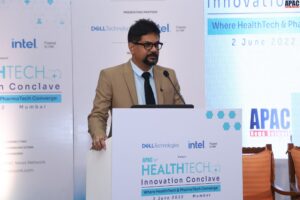 The Conclave was well supported by the industry with active participation from the likes of Dell Technologies, Numen Healthcare, Citrix, Murata Vios and Pinnacle. Primarily the discussions ranged from building a resilient and sustainable healthcare infrastructure to accelerating patient-centric transformation and innovation in healthcare and leading to looking at increasing accessibility, affordability and improving outcomes of tomorrow’s healthcare. The digital transformation of the pharma sector was discussed, as was the digitization of the diagnostic sector.
 “Emerging technologies such as AI will be leveraged more in coming times to transform digital health in the country”, opined Nawin Sona Natesan, Secretary to Government & Member Secretary, Development Board, Governor’s Office, Maharashtra. Venkat Sitaram, GM & Geo Head – Corprate Business at Dell India outlined the smart healthcare transformation solutions that Dell offers and how critical they can be for any hospital’s digital roadmap. How Saas and cloud computing is becoming extremely critical for smooth running of healthcare infrastructure was emphasized by Dixit Roy Mahidhara, Sr Director & Head Sales – Indian Enterprises, Citrix. Dr Alben Sigamani, Chief Scientific Officer, Numen Health emphasized on how Numen Health encourages disruptive innovation in HealthTech. Praveen Sebastian, AGM-Sales & Marketing, Murata Vios explained how as a medical technology company he is focused on utilizing sensors and remote monitoring services to lower the cost of care.
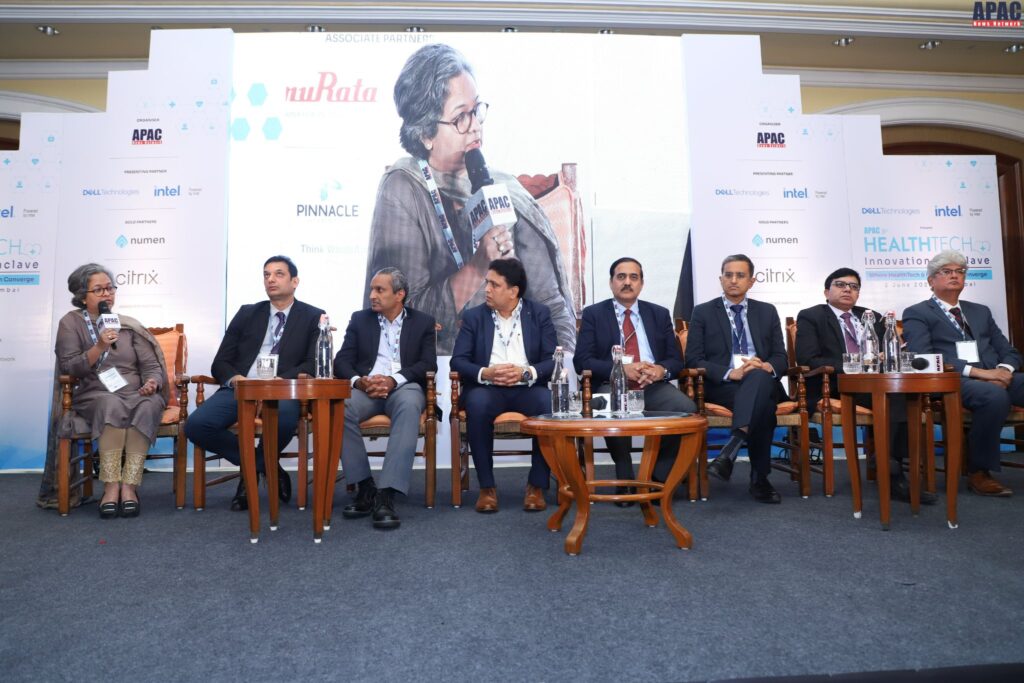
The panel discussions included renowned names from both healthcare and pharma including the likes of Dr. Raajiv Singhal, Founding Member, Managing Director & CEO, Marengo Asia Healthcare, Dr C S Pramesh, Director, Tata Memorial Hospital, Gautam Khanna, Chief Executive Officer, P D Hinduja Hospital, Debashish Roy, Director & Head, Pfizer Digital, Vishwanath Swarup, COO, Bharat Serums and Vaccines, Rajendra Chunodkar, President- Manufacturing Operations, Lupin India, Ganesh Ramachandran, Global Chief Information Officer, Alkem Laboratories Ltd., Sreeji Gopinathan, Chief Information Officer, Lupin Ltd., Viloo Williams, Chief Information Officer & Head Digital Transformation, Sir H N Reliance Memorial Hospital, Dr. Aloke Mullick, Group CEO, OMNI Hospitals, Prof. Dr Abhay Chowdhary, Professor & Head of Microbiology, DY Patil University,School of Medicine,Hospital and Research Centre, Dr Aruna Poojary, Head of Department, Pathology & Microbiology Breach Candy Hospital Trust, Dr Barnali Das, Consultant Laboratory Medicine, Kokilaben Dhirubhai Ambani Hospital, Dr. Deepak Patkar, Director, Medical Services & Head Department of Imaging, Nanavati Max Super Speciality Hospital, Dr.Kunal Punamiya, CEO, S L Raheja Hospital – A Fortis associate, Dr. Niraj Uttamani, Medical Superintendent, Lilavati Hospital & Research Centre, Dr Sandeep Gore, Director- Emergency Medicine, Fortis Hospital, Mulund, Dr. Shreekant Sapatnekar, Medical Director, Godrej Memorial Hospital and Vijay Shetty, Vice President Distribution and Logistics, Alkem Laboratories among others.

The key focus points discussed included how are the different stakeholders in the healthcare ecosystem ranging from doctors, caregivers to administrators looking at adopting technology innovations in hospitals and how has telemedicine changed the dynamics of the engagement between caregivers and patients. Accessibility of quality healthcare and providing a quality sustainable ecosystem have often proved counter productive. Therefore, how are hospitals looking at improving accessibility and affordability while remaining sustainable at the same time. The panelists also explored how can a more evolved PPP model help in expanding the scope of more affordable and accessible healthcare.
What are the new-age technologies used in drug discovery, formulation, research, clinical trials and other processes, how did the pandemic accelerate process digitization of the pharma sector in the new normal and how has digitization help in better and smoother collaboration between the pharma companies and the health care givers were the other critical areas discussed.
For more Details, Visit Website: www.apacnewsnetwork.com/healthtech/5th-edition/