



















Lucknow: Creating an environment conducive to affordable housing involves a comprehensive strategy that combines effective policy development with sustainable innovation. It requires a coordinated effort between government, private sector entities, and the community.
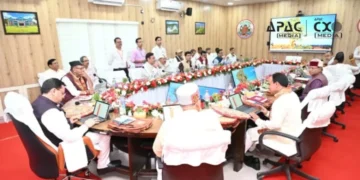
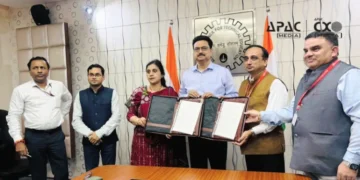
During the 2nd Sustainable Urban Innovation Conclave hosted by APAC News Network, held in Lucknow, IAS Ranvir Prasad , Housing Commissioner, UP Housing And Development Board, Government of Uttar Pradesh gave a special address on the topic “Creating and Enabling Environment for Affordable Housing through Conducive Policies and Sustainable Innovation.”
Affordability and sustainability
Prasad said, “Unfortunately, there is a competition between affordability and sustainability. If we pay more attention to sustainability, affordability takes a hit and vice versa.” Elaborating further on this statement, Prasad says that the most expensive component in the housing sector is the land as it is not easily available. On that people focus more on the living space than green areas, resulting in more expenditure on building materials.
Affordable housing ensures that a diverse range of residents can access safe and suitable living spaces, fostering social inclusivity. Concurrently, sustainable practices in urban housing, such as energy-efficient construction, green building materials, and thoughtful urban planning, contribute to long-term environmental health. Achieving a balance between affordability and sustainability is crucial for creating equitable and environmentally responsible communities.
Walkability in urban housing areas
Walkability in urban housing areas is crucial for community life as it positively impacts public health by encouraging physical activity and reducing sedentary lifestyles. Socially, walkable neighbourhoods promote community interaction, creating a sense of belonging. Economically, they stimulate local businesses as residents can easily access shops and services on foot, contributing to a resilient local economy.
Environmentally, walkability reduces carbon emissions, traffic congestion, and air pollution. Improved safety, enhanced quality of life, and decreased dependence on cars further underscore the significance of walkability in creating inclusive, vibrant, and sustainable urban communities. Prioritising walkability in urban planning is essential for fostering healthier, more connected, and environmentally conscious neighbourhoods.
Planning green and blue infrastructure
Prasad informed that earlier township planning involved laying out living areas first and then the areas left were turned into green and blue infrastructure. But the outlook has now seen a complete shift as the latter is given first priority.
Green infrastructure involves incorporating natural elements like parks, green spaces, and urban forests into urban planning to enhance biodiversity, mitigate heat island effects, and promote overall well-being. Blue infrastructure focuses on water features such as rivers, lakes, and sustainable stormwater management systems to prevent flooding, improve water quality, and provide recreational spaces.
Combining both types of infrastructure optimises urban living by fostering ecological balance, reducing environmental impact, and creating spaces that contribute to residents’ health and quality of life. Thoughtful incorporation of green and blue elements not only addresses environmental challenges but also establishes urban townships that are visually appealing, sustainable, and resilient to the impacts of climate change.
A 100 new townships in Uttar Pradesh
In a presentation to the government in September 2022, the Housing and Urban Planning Department advocated for an increase in housing provisions within urban areas. According to department estimates, the urban population is projected to rise from the current 23% to 35% within the next five years. In anticipation of this heightened urbanisation, there is a pressing need for affordable housing units.
To address this, 90 township projects will be facilitated by the 100 development authorities and the UP housing and development board, while the housing department, based at the headquarters, will oversee the establishment of an additional 10 projects. The overarching objective is to alleviate congestion in major urban centres and foster a collaborative environment for socioeconomic development throughout the state.