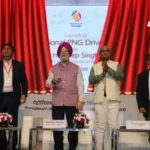










New Delhi: The 12th Edition of the Integrated Rating of Discoms was recently revealed by Union Minister for Power and New & Renewable Energy, R. K. Singh. The report charts out top-performing utilities, with Adani Electricity Mumbai Ltd. (AEML) ranking in first position, followed by Torrent Power’s operations in Surat and Ahmedabad.
Dakshin Gujarat Vij Company Limited (DGVCL) and Uttar Gujarat Vij Company Limited (UGVCL) ranked fourth and fifth respectively, completing the top five positions. Additionally, utilities from states like Gujarat, Haryana, Karnataka, Madhya Pradesh, and Andhra Pradesh have received A+ or A ratings, indicating significant strides in performance.
Recognition of Progress
The report recognised improved performance across several distribution companies. Minister Singh commended this improvement, and said, “The public need to know how the discoms are performing and what their efficiencies are. The ratings exercise is an important step towards transparency in governance.” The report revealed that the number of discoms in the A+ category increased from 12 in the 10th edition to 14 in the current one.
Rating Framework and Methodology
The rating framework and scoring methodology depends on financial sustainability, performance excellence, and the external environment of state and private utilities and power departments. This approach allows a comprehensive evaluation of discom performance, facilitating targeted interventions and improvements.
Reduction in Losses and Enhanced Efficiency
The report discovered a decline in Aggregate Technical and Commercial (AT&C) losses, indicating a successful attempt towards enhancing efficiency in operations. Additionally, the report showed improvements in billing and collection efficiency, demonstrating a well organised approach to revenue management within the sector.
“Our motive behind implementing smart prepaid meters is to increase these efficiencies to 100%, which will also ensure that the AT&C losses of discoms come down to single-digit,” Minister Singh justified.
Encouraging Long-Term Power Procurement
Singh advocated for discoms to secure long-term power resources to tackle reliance on costly short-term purchases. He said, “This is one thing we are persuading the discoms, to enter into long-term PPAs for at least 85% of their electricity requirement. We have laid down Resource Adequacy Rules which stipulate that discoms have to tie up power to meet the needs of the areas they serve.”
He further informed that rules have been established which “specify penalties for gratuitous load shedding,” along with forums that allow customers to share their grievances. This shift allows stabilised power prices and ensures a sustainable and secure energy supply for consumers.
Evaluation of State Power Departments
In addition to assessing distribution companies, the report also evaluates state power departments. Thrissur Corporation Electricity Department (TCED) of Kerala emerged as the top performer earning a rating of A, followed by Delhi’s NDMC at 2nd position, Puducherry at 3rd, Goa at 4th and Nagaland at 5th positions, all with a B rating.
Navigating Challenges
Despite the progress, the report shows stubborn challenges within the sector. Increased power purchase costs, driven by factors such as coal imports and fluctuating exchange prices, pose a significant challenge. Furthermore, the widening gap between the Average Cost of Supply (ACS) and Average Revenue Realised (ARR) suggest the need for continued efforts to ensure financial sustainability.
Evolution of the Rating Exercise
Since its foundation in 2012, the Integrated Rating exercise has played an important role in aiding improvements and encouraging transparency within the power sector. The framework has evolved over the years to reflect changes in the sector’s landscape and national priorities to remain relevant and effective.