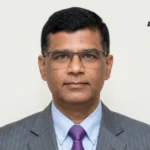


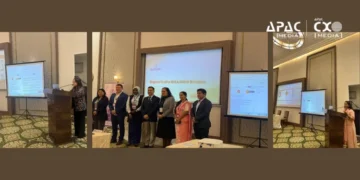


















In an exclusive discussion with CXO News & APAC News Network, Urvashi Prasad, Director, NITI Aayog measures the successes of different health-related public programs while explaining the dynamics of the Aspirational Districts Program.
What are your roles and responsibilities within NITI Aayog especially for the social development sector?
I have been working at the India Government’s premier policy think tank, NITI Aayog for the last nearly 8 years. My work has focused on health, nutrition, drinking water, and sanitation. I co-authored India’s first Voluntary National Review on SDGs which was presented at the United Nation’s High-Level Political Forum (UN-HLPF) in 2017.
Upon the nomination of the then Vice Chairman, NITI Aayog, I was appointed as a member of the Taskforce for Overseeing the Implementation of SDGs in India in 2017. I have worked on medical education reforms (drafting bills to replace the Medical Council of India and the Councils governing the Indian Systems of Medicine) as well as the COVID response. I have also worked as part of the Development Monitoring and Evaluation Office which is an attached office of NITI Aayog and on G20-related initiatives.
What are the measures undertaken by NITI Aayog to build a resilient monitoring and evaluation ecosystem in India through DMEO?
As the apex Monitoring & Evaluation (M&E) office in the country, DMEO supports the Government in achieving the national development agenda through M&E of government policies and Programs. Since its inception in 2015, the office has aimed to support rigorous, data-driven, citizen-centric, and outcomes-driven program management and policymaking.
DMEO has been mandated to actively monitor and evaluate the implementation of Government of India Programs and initiatives so as to strengthen their implementation and scope of delivery on an ongoing basis. Additionally, DMEO undertakes evaluation of selected Programs/schemes, suo-moto, or on the request of the Prime Minister’s Office (PMO) or Program implementing Ministries/ Departments of the Government of India.
Broadly, DMEO functions can be categorized into i) Monitoring, ii) Evaluation, and iii) Strategic Initiatives encompassing partnerships and capacity building. DMEO works with Central Ministries and Departments to prepare the Outcome Budget which is laid in Parliament alongside the Union Budget. It also monitors India’s performance on select Global Indices and facilitates the strengthening of the data systems of Central Government Ministries and Departments through the Data Governance Quality Index.
How would you measure the development or progress under the Aspirational Districts Program?
49 Key Performance Indicators (KPIs) have been identified under the ADP across 5 sectors. These indicators have been further segregated into eighty-one data points. The indicators are a mix of input, process, output, and outcome indicators. A comparison between the Aspirational Districts (ADs) and their counterparts by an independent UNDP Study undertaken in 2021 found that ADs have outperformed non-ADs.
Across the sectors of health and nutrition, and financial inclusion, the study found that 5.8% more pregnant women with severe anemia are treated, 4.5% more pregnant women register for antenatal care within their first trimester, 9.6% more home deliveries are attended by a skilled birth attendant, 4.8% more children diagnosed with diarrhea are treated.
Under financial inclusion indicators, the study found that 406, 847, and 1,580 more accounts were opened per 1 lakh population under the Pradhan Mantri Jeevan Jyoti Bima Yojana, Pradhan Mantra Suraksha Bima Yojana and Pradhan Mantri Jan-Dhan Yojana, respectively.
In January 2023, the Aspirational Blocks Program was launched to replicate the success of the ADP template across 500 relatively underdeveloped blocks in the country.
How would you recommend the partnership between the center and the states in managing the government expenditure on health?
Though health is a state subject, the central government has been playing an increasingly greater role in health financing. With the launch of several schemes such as the National Health Mission, Ayushman Bharat, and the Pradhan Mantri Swasthya Suraksha Yojana, the central government has expanded its footprint in healthcare.
Government spending on health between 2018-19 and 2019-20 increased by 12%, more than double the growth rate between 2017-18 and 2018-19 which was at 5%. Additionally, in General Government Expenditure (GGE), the share of health sector spending has steadily increased from 3.94% to 5.02% between 2014-15 and 2019-20.
Health spending by most states has been around 5 percent or lower of their total expenditure. This comes after the National Health Policy, 2017 asked state administrations to increase their health expenditure to 8 percent of their total expenditure. Thus, there is scope for several states to raise their spending on health, in addition to increase in central government health expenditure.
Where is the convergence happening between the Aspirational Districts programs and the SDGs?
The Aspirational Districts Program (ADP) was launched by the Indian Government in January 2018. It covers 112 districts (administrative divisions) across the country, those which have historically lagged. While progress has been made at the national level, disparities between states and districts persist. It is to address this challenge that a program of this size and scale was launched by the government to accelerate progress on various socio-economic outcomes at the grassroots level through an innovative ‘3C’ approach — Competition, Convergence, and Collaboration.
By fostering competition among districts through real-time performance monitoring, enabling convergence of government schemes, and promoting collaboration among government stakeholders and beyond, the Program places a sharp focus on achieving results. Instead of a large infusion of funds, the Program’s emphasis is on improving governance for better outcomes in areas such as health, nutrition, education, agriculture, water resources, financial inclusion, skill development, and basic infrastructure, all of which pertain to one or more SDGs.
How is the government strengthening preventive and primary healthcare for women?
The government is trying to make a conscious shift to cater to women’s health and well-being much more holistically than in the past. Many Programs and schemes have historically focused on the health of women as it relates to their childbearing and child-rearing roles, which points to a wider societal issue.
Now we are trying to make a conscious shift away from that and look at women’s health and well-being holistically. For instance, the government is focussing on strengthening preventive and primary health care for women and providing screening for common illnesses including breast and cervical cancer through Health and Wellness Centres established under Ayushman Bharat. Some estimates suggest that 1 out of 5 women suffer from mental health challenges. Thus, this is another important area of focus as is addressing anaemia.
How would you evaluate the success of programs like Poshan Abhiyaan, Ayushman Bharat, and Swachh Bharat, and what sort of roadmap is planned for these programs in the future?
Swachh Bharat Mission has led to significant improvements in sanitation and cleanliness across India, with a major reduction in open defecation and a focus on solid/liquid waste management.
Poshan Abhiyan has had a significant impact on improving nutritional outcomes in India. It has brought a strong focus on nutrition during the first 1,000 days of a child’s life. The initiative has catalyzed a nationwide movement for nutrition-related behavior change. Since 2018, the World Bank has supported the POSHAN Abhiyaan in 11 priority states. In March and April 2021, the Bank conducted a survey to assess the Program’s delivery of nutrition services, whether the nutritional knowledge of beneficiaries had improved, and if they had adopted more appropriate nutrition and feeding practices – the key desired outcomes.
The findings demonstrated that the services delivered through the POSHAN Abhiyaan — the receipt of relevant messages, home visits by the Anganwadi worker, and attendance at community-based events — were associated with improved nutrition behaviors.
India took a giant leap toward ensuring access to quality healthcare services agnostic of economic status by launching the flagship health protection scheme, Ayushman Bharat Pradhan Mantri Jan Arogya Yojana (AB-PMJAY) in September 2018. The scheme provides a health cover of Rs 5 lakh per family per year for secondary and tertiary care hospitalization to more than 12 crore families (bottom 40 percent of the population), making it the world’s largest health assurance scheme.
About 15.5 crore families are covered under AB-PMJAY and states’ schemes are being implemented in convergence with it. This amounts to potential coverage for half of India’s population. Eleven states/UTs have pushed for 100 percent coverage of their respective population.
In September 2023, five years after the launch of the scheme, 24 crore Ayushman Cards had been created. The scheme has catered to more than 5.39 crore admission events worth Rs 66,284 crore in the five years of its implementation. If the beneficiaries had availed the same care outside AB-PMJAY’s ambit, the total cost of treatment would have been nearly two times higher. This has resulted in savings of more than Rs 1 lakh crore. Currently, daily, nearly 45,000 hospital admissions are authorized under the scheme — in other words, roughly 31 treatments per minute.
It is heartening that 48 percent of treatments under the scheme have been availed by women. An important feature of AB-PMJAY is interstate portability. This means a patient registered in one state is entitled to receive care in any other state that has an AB-PMJAY Program. This has proved helpful to migrants, especially in emergencies.
Disclaimer: Views expressed are personal.
Alice Purty & Rajneesh De, APAC News Network