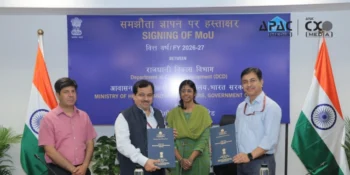






















New Delhi: The National Capital Region Transport Corporation has decided to set up a 110 MW captive solar power plant to supply electricity to the Delhi–Ghaziabad–Meerut Namo Bharat corridor.
The project, to be developed in Uttar Pradesh, has been awarded to NLC India Limited, a central public sector enterprise under the Ministry of Coal. The solar plant is expected to be completed within 24 months and is projected to meet close to 60% of the corridor’s total electricity demand once it becomes operational.
Electricity forms a significant part of NCRTC’s operating expenses, accounting for nearly 30–35% of total costs on the Delhi–Ghaziabad–Meerut corridor. According to the corporation, the captive solar facility could reduce electricity expenditure by about 25%, offering long-term cost stability for corridor operations that rely heavily on continuous power supply.
The plant will be connected to the Uttar Pradesh power grid, from where electricity will be transmitted to receiving substations located in both Uttar Pradesh and Delhi along the corridor. The project will be implemented through a joint venture between NCRTC and NLC India Limited, marking one of the first instances of a captive solar power model being adopted for India’s regional rapid transit and metro systems.
From an environmental standpoint, NCRTC estimates that the project could lower carbon dioxide emissions by around 1.77 lakh tonnes annually. The shift to solar power is also expected to reduce reliance on conventional electricity sources that contribute to local air pollution through emissions such as nitrogen oxides and sulphur dioxide, an issue of concern in the Delhi-NCR region.