





















JSS University, Noida, has systematically integrated technologies such as AI, digital platforms, and data-driven systems into academic delivery to enhance learning outcomes. Dr H.R. Mahadevaswamy, VC, JSS University, Noida, explains to APAC Media how students are gaining continuous exposure to real-world technologies through smart classrooms, online content repositories, virtual internships, and industry-supported platforms.
How is JSS University designing its academic framework to ensure students gain strong practical skills aligned with industry expectations?
At JSS University, Noida, our academic framework follows an outcome-based and practice-oriented model, with over 40% of the curriculum focused on laboratories, projects, internships, and experiential learning.
Every student completes at least one mandatory internship and two industry- or research-based projects, while more than 60% of courses we do hands-on components such as coding labs, design studios, simulations, and case studies. Our curricula are reviewed periodically with inputs from industry experts and academic partners to remain aligned with emerging technologies and market needs.
We have been establishing Centres of Excellence and advanced laboratories in areas such as AI, Health Technologies, Quantum Computing, Pharmacology, Digital Humanities, Cyber Security, Rail Research, Data Analytics & Intelligence and 6G Communications, where students work on real-world and sponsored projects.
In the last academic year, over 50 per cent of our students participated in live industry or research projects. This is supported by skill-development and certification programs annually, ensuring that our graduates are technically competent, professionally skilled, and industry-ready.
In what ways are advanced technologies such as AI, digital tools, and data-driven learning being incorporated into academic delivery?
At JSS University, Noida, technologies such as Artificial Intelligence, digital platforms, and data-driven systems are systematically integrated into academic delivery to enhance learning outcomes. Most of our programs incorporated AI-enabled tools, virtual laboratories, learning management systems, and simulation software for blended and experiential learning. Faculty members use digital dashboards and analytics to track student performance, personalise mentoring, and improve academic interventions.
We have introduced specialised courses and hands-on modules in AI, Data Science, Cloud Computing, Health Informatics, and Digital Governance, supported by modern computing and research infrastructure. Through smart classrooms, online content repositories, virtual internships, and industry-supported platforms, students gain continuous exposure to real-world technologies. This technology-driven ecosystem ensures that learning at JSS University, Noida, remains relevant, adaptive, and future-ready.
Could you share details of some current industry or international collaborations and how they contribute to student learning and career exposure?
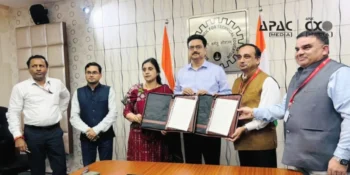
JSS University, Noida, has forged strategic industry partnerships to enhance student learning and career exposure. For example, we have signed an MoA with GauravGo Games Technologies to run structured game-development, multimedia internships that give students real project experience and early professional exposure, with 130+ first-year students already placed in internships through this collaboration.
We also have an MoU with Varnika Energy focused on skills and innovation in electric mobility, enabling hands-on work in sustainable technologies.
We are partnering with Bharath Forge Ltd, Pune, in the area of AI & ML, Robotics for Manufacturing, Automotive and Defence technologies.
Also, partnering with Patil Rail Infrastructure Pvt Ltd & Apnatech in the AI, Rail research & Innovation. Industry-specific labs will be set up in these areas.
On the international front, we have established a partnership with Flinders University (Australia) to foster academic exchange, collaborative research, and global engagement opportunities for students and faculty.
Through industry conventions, hackathons, expert guest lectures, and joint programs, these collaborations deepen students’ understanding of real-world problems, build professional networks, and strengthen readiness for global careers. A few more partnerships with Universities inthe UK, Dubai, Australia, Canada and Skill development companies are in the pipeline.
What steps is the university taking to continuously develop faculty expertise for delivering modern, skill-focused education?
JSS University, Noida, places strong emphasis on continuous faculty development to deliver modern, skill-focused education. Recently, the university organised a 2-day Research Confluence and a 2½-day Teaching- Learning Workshop focused on Outcome-Based Education (OBE) and NEP 2020 implementation, helping faculty strengthen pedagogical practices and curriculum design. Faculty also participate actively in industry events and academic conferences to stay updated with emerging trends and professional practices.
In addition to these internal programs, JSS University supports faculty attendance at external industry workshops and technical sessions, enhancing their expertise in digital tools, experiential learning, and industry standards. Regular in-house training, expert talks, and collaborations with academic and industry partners ensure that our educators are equipped to mentor students effectively and deliver contemporary, competency-driven education.
How do internships, industry projects, and experiential learning opportunities enhance students’ workplace readiness?
At JSS University, Noida, internships, industry projects, and experiential learning are strategically integrated from the early years to ensure systematic workplace readiness by 2028. Through early student mapping, structured internships, and progressive project-based learning, students gain continuous exposure to professional environments across their academic journey.
Student undertakes multiple internships and industry-aligned projects, enabling them to develop technical competence, workplace discipline, and problem-solving skills well before graduation. Live projects with corporate partners, innovation labs, field training, and internships help students work on real industry challenges using standard tools and practices.
These experiences build strong employer confidence, support diverse career pathways, including jobs, higher studies, and entrepreneurship, and contribute to a sustainable placement ecosystem. This planned and institutionalised approach ensures that JSS University graduates are placement-ready, adaptable, and industry-relevant by 2028.
What are the university’s key focus areas for strengthening technology integration, research orientation, and student employability in the coming years?
At JSS University, Noida, skill development and training are guided by the core philosophy of “Early identification, differentiated preparation, and continuous industry engagement.” From the second year, students are mapped based on aptitude, interests, and career goals, enabling targeted interventions through structured and modular training in foundation skills, core domain competencies, and advanced industry-aligned technologies.
Based on this early profiling, students follow customised learning pathways supported by practice-oriented modules, mock interviews, certification programs, and real-world problem-solving activities.
Continuous engagement with industry through internships, expert sessions, and live projects ensures relevance and professional exposure. This integrated approach builds confidence, enhances employability, and prepares students for diverse career outcomes, including employment, higher studies, and entrepreneurship.