















NMMC is setting a benchmark for smart, responsive urban administration where last-mile service delivery is reliable, measurable and trusted. Dr Kailas Shinde, IAS, Municipal Commissioner, NMMC, exclusively informs Nisha Samant, Associate Editor, APAC Media, that NMMC is pursuing a human-centric, inclusive development approach that blends housing access, community rehabilitation, and economic empowerment.
As Municipal Commissioner, how do you define your long-term vision for Navi Mumbai, and what key governance shifts are necessary to transform it into a truly citizen-centric and future-ready city?
My long-term vision for Navi Mumbai is to establish it as India’s leading circular economy hub and a citizen-first smart city, fully aligned with the Niti Aayog MMR Growth Hub plan and the Government of India’s Sustainable Development Goals.
Navi Mumbai already contributes significantly to the regional economy, with an estimated GDP of $11.5 billion and a per capita income of ₹5.5 lakh, making it one of Maharashtra’s most prosperous urban centres. Yet prosperity must go beyond numbers—it must translate into resilience, inclusivity, transparency, and liveability for every resident.
At its core, Navi Mumbai will be data-driven, climate-resilient, and citizen-first—where every service is predictable, measurable, and accountable. This vision is not just about infrastructure; it is about people, participation and preparedness for the future.
To realise this vision, three governance shifts are essential:
- From infrastructure-led to citizen-led planning: Every project – whether transport, housing, or public spaces; begins with citizen needs, guided by structured feedback loops and participatory mechanisms.
- From reactive administration to proactive governance: Predictive analytics, climate modelling and citizen feedback are being integrated to anticipate challenges and act before they escalate.
- From fragmented service delivery to integrated systems: Seamless coordination across departments, supported by digital dashboards, ensures accountability and transparency at every level.
We are going to do it through:
- Robust MIS with daily dashboards for sanitation, water, roads, citizen grievances and finances.
- Ward-level SLAs with performance-linked payments, geo-tagged evidence and public disclosure of compliance.
- Single-window clearances, time-bound approvals and paperless workflows
- Open data of ward level scorecard sand publishing of service metrics
- Every project evaluated through a resilience and equity lens—heat mitigation, flood management, biodiversity gains and inclusion.
This vision is not just about infrastructure—it is about people, participation and preparedness for the future.
Navi Mumbai’s planned urban fabric, strong industrial base and proximity to Mumbai give us a unique and New Mumbai International airport advantage. My goal is to harness these strengths while ensuring that growth is inclusive, resilience is embedded and citizens are empowered to shape the city’s journey.
Ultimately, Navi Mumbai will stand as a model city for India and the Asia-Pacific region—prosperous, inclusive, sustainable, and citizen-first.
Navi Mumbai continues to attract population and investment at a rapid pace. Howis the administration balancing infrastructure expansion with livability, particularly in terms of transport, water security, and public spaces?
Navi Mumbai continues to attract population and investment at a rapid pace and our responsibility as an administration is to ensure that growth does not compromise liveability. Every infrastructure project is designed not only for capacity but also for quality of life, sustainability and citizen accessibility.
Transport – Future-Ready and Citizen-Friendly
- Already, 70% of the fleet is CNG/electric, positioning Navi Mumbai as a leader in clean mobility.
- We are targeting one bus per 1,000 residents, aligned with the MMR Growth Hub plan, and transitioning the new fleet of 1,500 buses to 100% electric by 2030, reducing emissions and operating costs.
- Women-only buses are being expanded on high-demand routes to ensure safe and inclusive travel.
- Our proposed City Parking Policy supports the 15-minute walking city concept by optimizing parking, prioritizing pedestrian and cycling infrastructure and reducing car dependency.
- EV charging infrastructure is being installed at all parking nodes, bus depots and civic facilities.
- We are coordinating with CIDCO, MMRDA and Metro authorities to ensure transit-oriented development (TODs) at Vashi, Ghansoli and Koparkhairane, alongside redevelopment of station areas at Sanpada and Nerul.
- We are also focussing on Major Road projects such as the Palm Beach Road Extension and 19 flyovers at key junctions are part of a comprehensive City Mobility Plan to improve traffic flow and connectivity.
Water Security – Reliable, Resilient, and Reuse-Oriented
- Our very own Morbe Dam supplies 450 MLD daily, monitored through SCADA systems for quality and efficiency.
- Now, 24×7 water supply pilot in Belapur ward is being scaled citywide to ensure 100% tap water connections for households and establishments.
- Our Water Supply Augmentation projects include Poshir Dam (437 MLD), Shilar Dam (63 MLD)and the Patalganga River Project (150 MLD) to meet rising demand.
- Other Long-term initiatives are Bhira/Kundalika River Diversion and Morbe pipeline replacement which will build resilience.
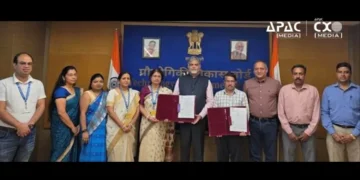
- We have signed a landmark MoU with MIDC which ensures ₹494 crore revenue over 15 years from reuse water sales.
- Our New Tertiary Treatment Plants (TTPs) will achieve ≥40% reuse of treated water, particularly for data centres, industries, and construction.
- Smart distribution initiatives are being deployed to reduce leakages and ensure equitable supply.
Public Spaces – Green, Inclusive, and Accessible
- Few years before; an old dumpsite at Koparkhairane was transformed to an Urban Forest within the city named Nisarg Udyan (11.4-acre), increasing city’s green cover by 26%.
- We have expanded our success of Miyawaki forests at STPs, SWM Plant and Jewel of Navi Mumbai to showcase our commitment to biodiversity.
- We built an Aspirational toilet nearby Nisarg Udyanfrom recycled plastic, with Divyang friendly stalls, baby care units and sanitary pad vending machines.
- New projects include playgrounds under flyovers, multipurpose sports complexes, a Botanical Garden and seed collection centres.
- The draft development plan reserves 537 plots for parks, gardens and community spaces, ensuring every ward has accessible recreational areas.
We are balancing growth with liveability by embedding sustainability into transport, water, and public spaces. Every bus, every drop of water and every park is designed to serve citizens first—making Navi Mumbai not just a prosperous city, but a healthy, inclusive and future-ready home for its residents.
Despite technological advancements, citizens often express dissatisfaction with last-mile service delivery. What structural reforms are you implementing within NMMC to ensure accountability at the ward and ground-staff levels?
Despite technological advancements, I recognise that citizens often judge governance by the quality of last‑mile service delivery whether waste is collected on time, streets are clean, water supply is reliable and grievances are resolved quickly.
To address this, NMMC has undertaken structural reforms that embed accountability directly at the ward and ground staff levels.
Structural Reforms Implemented:
- Our Citizens can directly raise complaints through the Swachhata App and NMMC’s revamped website. This reduces delays and ensures faster resolution normally within 7 days as recommended by our States’s 150 day program mandates.
- Our 105 municipal services are already available online, with more in the process of digitization, making governance accessible and transparent.
- Our Live dashboards track complaint status in real time, enabling our departmental heads (DMCs) to monitor performance and identify service gaps quickly.
- Over 200 Waste Collection & Transportation vehicles are integrated with the Integrated Command & Control Centre(ICCC), ensuring route compliance, time-stamped operations, and transparent monitoring. Every collection is digitally logged, creating verifiable records of service delivery.
- Our e-Office System digitized administrative workflows, enhancing inter-departmental coordination and ensures transparency in internal decision-making.
These reforms—spanning digital grievance redressal, GPS/RFID-enabled operations, ICCC oversight and strict documentation protocols—are collectively aimed at driving accountable, transparent and citizen-centric governance. By empowering both citizens and municipal staff with real-time systems and performance visibility, NMMC is setting a benchmark for smart, responsive urban administration where last-mile service delivery is reliable, measurable and trusted.
Urban flooding, waste management, and climate resilience are growing concerns. How prepared is Navi Mumbai to tackle climate-related challenges, and what preventive measures are being prioritised over reactive solutions?
Navi Mumbai was conceived future‑ready by CIDCO’s original planning as a polycentric, well‑serviced satellite city with robust water supply, holding ponds for flood mitigation and a planned urban grid. Building on this strong foundation, NMMC is evolving the city with climate resilience approaches.
Urban Flooding – Preventive Infrastructure
- Navi Mumbai’s Dutch‑inspired holding ponds were designed decades ago to regulate stormwater through flap gates installed at tidal points to prevent seawater backflow during high tide and rainfall.
- Now, we are investing ₹2,000 Cr to rejuvenate 11 ponds, with IIT Bombay‑approved designs, desiltation, biodiversity restoration, and public recreation zones.
- It will result in reduced micro‑flooding, improved natural retention, cooler micro‑climates and lower drain maintenance costs.
- We have mandated Rainwater harvesting in new constructions, ensuring long-term water resilience.
Waste Management – Zero Landfill & Circular Economy
- NMMC is already a Super Swachh League city.
- Now, we are coming up with a state-of-the-art ISWM Facility with bio methanation, RDF, biochar and waste-to-energy (27 MW/day electricity, 45 TPD biochar, 19 TPD compressed biogas).
- Our 150 TPD Construction Demolition Processing Plant produces paver blocks and aggregates, preventing illegal debris dumping.
- We have enforced ban on single-use plastics and installed cotton bag vending machines to avoid usage of plastics which could choke the drains if mismanaged.
- We have already commissioned 55 mld TTP, with the total capacity of 454 mld STP for treating the gray water with 100% collection.
- Our goal is to attain 40% reuse of treated water by 2030. Today we have already achieved 15% of the reuse of treated water.
Renewable Energy:
- We are coming up with a 100 MW floating solar at Morbe Dam (₹650 Cr project) to cut municipal energy costs by ~40%.
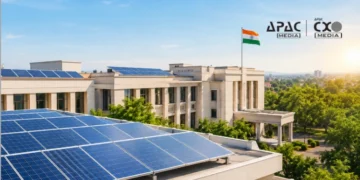
- We have also started with Solarisation of civic infrastructure by installing Panels on public buildings and bus depots to lower emissions and ensure energy resilience.
- We are promoting Green infrastructure by development of Seed collection centres, botanical gardens and 40 hectares of new green cover under Majhi Vasundhara Abhiyan to boost biodiversity and carbon absorption.
Smart Monitoring & Governance
- We are upgrading our Integrated Command & Control Centre (ICCC) to ICCC 2.0 by equipping with flood sensors, real-time CCTV, AOI Monitors and weather alert systems for proactive response.
- To have accountability; we have formed a Sustainability & Resilience Cell which pulls together experts in water, waste, climate and finance to integrate ward-level resilience plans, climate dashboards and quarterly outcome reviews.
By integrating preventive flood infrastructure, zero-landfill waste systems, renewable Energy and smart monitoring, NMMC is ensuring that Navi Mumbai’s growth is not only prosperous but also safe, sustainable and citizen-centric.
This approach delivers a city that is prepared for tomorrow’s climate risks while improving the quality of life today—making Navi Mumbai a model of liveability and resilience for India and the Asia-Pacific region.
Affordable housing and rehabilitation of informal settlements remain complex challenges. How does NMMC plan to pursue inclusive development while ensuring dignity, safety, and economic opportunity for all sections of society?
Affordable housing and the rehabilitation of informal settlements are among the most complex challenges for any growing city. Navi Mumbai, with its planned foundation by CIDCO, has relatively lower slum density compared to other metros, but the responsibility remains to ensure that every resident lives with dignity, safety, and opportunity.
NMMC is pursuing a human-centric, inclusive development approach that blends housing access, community rehabilitation, and economic empowerment.
- NMMC has created a Redevelopment Cell in partnership with CIDCO to strategically redevelop aging tenements and underutilized areas. This cell coordinates approvals, stakeholder consultations, and financing mechanisms to accelerate housing upgrades.
- Implementation of Urban Development Control and Promotion Regulations (UDCPR) ensures that 20% of area in plots >4000 sq. m is reserved for Economically Weaker Sections (EWS) and handed over to MHADA. This embeds affordability into every large scale development.
- We are also focussing on Mass Affordable housing projects which are strategically integrated with metro corridors and the upcoming Navi Mumbai International Airport, reducing commute costs and improving access to employment opportunities.
- NMMC has plans to launch a MahaRERA-style online portal for registering redevelopment projects, approvals and compliance, ensuring transparency for citizens and investors.
- In collaboration with CIDCO, NMMC is driving in-situ rehabilitation in slum areas such as Digha, Turbhe, and Ghansoli, upgrading living conditions with modern infrastructure while minimizing displacement.
- We have launched Slum-Free Navi Mumbai Vision in 2024 which brings together MHADA and private developers under PPP models to upgrade housing while preserving community bonds and local ecosystems.
- Rehabilitation is not just about housing; it includes sewerage audits, extended waste C&T services for local sewage, waste treatment and sanitation compliance which are also being considered. Redeveloped housing clusters will include provisions for small businesses and street vendors, sustaining livelihoods within communities.
- We have also established women’s hostel units in MIDCs, integrated with transport networks, to improve women’s labour force participation and are aiming to expand the numbers.
Our approach to housing and rehabilitation is not limited to brick and mortar; it is about restoring dignity, ensuring safety and creating opportunity. By embedding affordability in regulations, transparency in approvals and livelihoods in redevelopment, NMMC is pursuing inclusive development that ensures every resident of Navi Mumbai can live not just with shelter, but with pride and economic empowerment.
Smart governance often emphasises digital solutions. In your view, how important is the human element—training, ethics, and leadership—in ensuring that technology genuinely improves municipal governance?
While digital solutions such as e‑governance platforms, AI chatbots and real‑time dashboards are transforming municipal operations, technology alone cannot guarantee effective governance as said & discussed earlier.
The true success of smart governance lies in the human element—training, ethics, transparency and leadership—that ensures technology genuinely improves outcomes for citizens.
- Our ICCC 2.0, grievance apps and MIS dashboards are designed to empower staff—not replace them—by giving them real‑time visibility and decision support.
- NMMC has rolled out targeted training for ward officers, engineers and ground staff on using digital tools like the Daksh grievance app, SCADA systems for water management and RFID‑based waste tracking.
- Regular workshops ensure uniform technology adoption across departments, reducing delays caused by skill gaps and empowering staff to use dashboards and mobile apps effectively.
- Officers are trained to lead by example, using dashboards and MIS reports not just for compliance but for proactive problem‑solving.
Smart governance is not about machines replacing people—it is about people empowered by machines. Technology provides the tools, but training, ethics and leadership provide the
conscience and direction.
By investing in capacity building, embedding ethical standards and cultivating responsive leadership, NMMC ensures that digital solutions genuinely improve municipal governance— delivering not just efficiency, but trust, dignity and citizen‑centric outcomes.
What is your message to the citizens of Navi Mumbai regarding their role in governance, and how can public participation meaningfully shape the city’s next phase of growth?
Every citizen’s voice shapes policy, every action strengthens resilience, and every partnership accelerates progress. Together, we can ensure Navi Mumbai remains a model city—smart, sustainable, and livable for all. Governance is not only the responsibility of the administration; it is a shared journey where citizens are co‑architects of the city’s future.
- Our citizens — including young students, women, and transgender communities — actively support initiatives under Majhi Vasundhara Abhiyan and the Swachh Bharat Mission by planting trees, conserving water, and reducing plastic use to strengthen Navi Mumbai’s climate resilience.
- Many households are diverting wet waste through home composting, producing useful compost for kitchen gardens and housing societies, reinforcing our circular economy goals.
- We encourage residents to adopt rooftop solar, energy‑efficient appliances, and reduced carbon footprints to align with the city’s net‑zero pathway.
- Citizens are urged to respect and enjoy public spaces — parks, gardens, sports complexes, and recreation zones — which have been developed for inclusive community bonding. To promote responsible recreation, NMMC has also developed pet corners across the city to manage pet waste and encourage hygienic practices.
- Competitions such as Swachh Ward Rankings motivate communities to take pride in their neighbourhoods and foster healthy civic competition.
- Citizens play a vital role in monitoring cleanliness, reporting illegal dumping and ensuring compliance with civic rules. QR scanners installed at public toilets allow residents to provideinstant feedback, ensuring accountability and continuous improvement in sanitation services.
Navi Mumbai’s next phase of growth will be shaped not only by infrastructure and technology but by the collective spirit of its citizens. By embracing sustainability, respecting public spaces, following civic norms, and volunteering for community upliftment, residents can ensure that the city remains prosperous, resilient, and inclusive.
Governance succeeds when citizens and administration work hand-in-hand. My message is simple: your participation is the most powerful driver of Navi Mumbai’s future.