

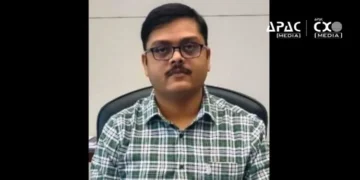













The North Eastern Council (NEC) is steering an ambitious transformation agenda under its “Vision NER 2047,” aligned with Viksit Bharat@2047, to reposition the region as a strategic economic gateway to Southeast Asia. In an exclusive interview with Bhaswati Guha Majumder, Associate Editor at APAC Media, Satinder Kumar Bhalla, ITS, Secretary, NEC, Government of India, explains how the Council is integrating AI-driven disaster management, geospatial planning, digital connectivity expansion, sustainable infrastructure, and tech-enabled livelihood initiatives to build a resilient, investment-ready and future-oriented North East.
As the nodal agency for the North Eastern Region’s development, what are the NEC’s top priorities over the next five to ten years and how are these aligned with the Centre’s broader vision for the North East?
Let me first explain the responsibilities for the development of NER. Developmental efforts of individual States are augmented by the Government of India through the Ministry of Development of North Eastern Region (MDoNER) and various central line ministries, which are mandated to spend 10 per cent of their annual budget on development of NER. The support by the government of India includes state-specific as well as Inter-State projects.
The North Eastern Council (NEC) is a statutory body under the Ministry of DoNER with the mandate of regional planning. Through the NEC secretariat, it also funds development activities under schemes of NEC, which are more of grass root level interventions for critical gap filling in sectoral priorities such as livelihood generation, developing tourism sites& cultural centres, capacity building for farmers, artisans, school infrastructure upgrade, including school buildings, market linkages, sustainability initiatives such as afforestation, solar lights etc.
As a regional planning body, it is currently transitioning from its former “Vision 2020” to a transformative “Vision NER 2047” aligned with Viksit Bharat@2047. This vision aims to elevate the North Eastern Region (NER) to VIKSIT NER by India’s centenary of independence.
NEC’s Top Priorities (5–10 Year Horizon):
In the 72nd plenary of the council held in December 2024 at Agartala, Tripura, eight themes were identified and each theme was assigned to a high-level task force comprising four Chief Ministers of North Eastern States and the Minister of DoNER. For the last one year, these eight HLTFs have held many deliberations and their reports are expected to be discussed in the 73rd plenary meeting. Eight themes dealt with by HLTFs are i) Tourism, ii) Sports, iii) Handloom & Handicraft, iv) Agriculture and Horticulture, v) Investment Promotion, vi) Self- Reliance in Milk, Eggs, Fish and Meat, vii) Economic CorridorDevelopment, viii) Logistics Costs, Infrastructure and Connectivity. The recommendations from these HLTFs would pave the way for focused strategies to move towards the goal of Viksit NER@2047.
As can be seen, many of the themes mentioned above, such as Economic Corridor, Logistics, etc. aligns with the Act East Policy, connecting the NER to Southeast Asian nations, aiming to transform the region from a landlocked area into a land-linked gateway for trade with ASEAN. Ministry of DoNER has undertaken regular Investment promotion events which have led to investment intentgeneration worth lakhs of crore rupees. Big companies and MNCs are being encouraged to invest in the North East. Focus is on efforts which add more economic value within the region itself rather than transporting raw material outside the region.
With the Government of India’s investments crossing over Rs 1 lakh crore per annum, the results are very encouraging. It is because of all such efforts that the region has shown a higher CAGR than India as a whole. This shows the importance given by Hon’ble PM for the development of North East, he himself has visited over 70 times to North Eastern States and Union ministers have made over 700 visits since 2014. The goal is clear- Viksit NER@2047 and the Central government is making wholehearted efforts in that direction.
Given the region’s difficult terrain, how is NEC approaching sustainable infrastructure development, particularly roads, bridges and power projects, in ecologically sensitive and hilly areas?
While these subjects are now handled by the MDoNER, the NEC secretariat continues to extend technical support in examining the proposals for new roads/bridges for quality, sustainability and induction of modern construction techniques. In the ecologically sensitive North Eastern Region (NER), MDoNER and other central line ministries prioritise climate-resilient and site-specific engineering to overcome terrain challenges while minimising environmental impact.
Roads and Bridges: Engineering for Resilience: Focus is on “all-weather” connectivity using methods that withstand high rainfall and seismic activity.
Power Projects: Transition to Clean Energy: Sustainable and efficient solutions are promoted, such as:
- Renewable Energy Shift: Small Hydro Power (SHP) and solar micro-grids are promoted for remote villages, which have a much smaller ecological footprint than mega-hydro projects.
- Grid Strengthening: Funding is directed toward comprehensive transmission and distribution schemes (implemented by PGCIL) to reduce “Aggregate Technical and Commercial” (AT&C) losses, ensuring more efficient power delivery without new heavy construction.
Strategic Safeguards: Sustainability is hardcoded into the project lifecycle through strict regulatory frameworks:
- Mandatory Clearances: Every Detailed Project Report (DPR) must include statutory clearances for forests and the environment, ensuring that no project proceeds without ecological vetting.
- SDG Alignment: Infrastructure projects are now measured against the NER SDG District Index, which tracks various indicators across all Sustainable Development Goals to ensure balanced regional growth.
- Techno-Economic Vetting: Large projects undergo vetting by reputable institutions or NEC technical wings to ensure they use the most appropriate technology for the specific geological conditions.
Ecological Compensation and Livelihood Integration
- Afforestation through Agro-Forestry Models: To offset the loss of green cover arising from unavoidable developmental activities, NEC funds afforestation projects in denuded and degraded hill areas of the North Eastern Region. These initiatives are implemented through scientifically designed agro-forestry models developed by ICAR, integrating tree plantation with sustainable livelihood components. This approach not only restores ecological balance and enhances carbon sequestration but also promotes climate-resilient income opportunities for local communities, thereby aligning environmental restoration with socio-economic development.
Digital connectivity remains uneven across the North East. What role is NEC playing in strengthening telecom infrastructure and last-mile internet access, especially in remote and border villages?
Ministry of DoNER acts as a strategic coordinator and funding facilitator to bridge the digital divide in the NER. The ministry works in close coordination with the Ministry of Communications to implement large-scale connectivity programs. Minister of DoNER also holds the portfolio of communications, and he monitors the implementation of the 4G saturation project in NER, BharatNet integration for fibre connectivity to Gram Panchayats, and Satellite connectivity in remote villages every week. Ministry also funds e-learning setup in NE States, enabling students to reap the benefits of quality content delivered through internet.
NEC also supports many projects at grassroot level to promote internet use as well as empower the people of the North East. A few notable initiatives are:
- Advancing North East: A portal developed with funding support of NEC that provides a “one-stop solution” for career and livelihood information to youth, enabled by the expanding regional internet grid.
- Promotion of DPI: Efforts have led to approximately 58 per cent of merchants in the NER adopting digital payments (UPI), significantly reducing the region’s geographical isolation from the national economy.
- 5G Applications in NER: The NEC has supported the commissioning of eight 5G Training Laboratories across the North Eastern Region—among the first of their kind in the country and aligned with the Department of Telecommunications’ (DoT) national initiative of establishing 100 5G labs. These labs serve as innovation hubs for developing and deploying 5G-enabled, AI-driven applications tailored to regional needs, particularly in healthcare and artisan welfare. Key use cases deployed include: AI-based respiratory health assessment through cough sound analysis; cloud-enabled AI medical image diagnostics for improved clinical decision-making; AI-enabled drip monitoring systems for IPD patients; smartphone-based AI cataract screening; IoT/AI-based locomotor challenge assessment tools; and AI-integrated imaging devices for detection and classification of wound infections. These initiatives demonstrate how next-generation connectivity is being leveraged for inclusive, technology-driven service delivery in remote and underserved areas.
- NERACE: North Eastern Region Agri-commodity e-connect (NERACE) portal is a novel initiative funded by NEC, implemented through NERAMAC to improve market linkages for agri commodities, connecting buyers and seller farmers to cut down intermediaries so that maximum benefit goes to the farmers. The portal has over 2000 product listings, 5000 buyers and 700 sellers.
How is technology being leveraged to improve livelihoods in rural and tribal areas, for instance, in agriculture, skill development, tourism or MSMEs?
In the North Eastern Region (NER), there are many initiatives of the government of India through which technology is being deployed to turn geographical barriers into economic advantages by modernising traditional practices and opening new market linkages.
Agriculture: Precision & Space-Tech
- Satellite & Drone Monitoring: The North Eastern Space Applications Centre (NESAC) uses drones and satellite data for “Smart Crop Cutting Experiments” (CCE) and real-time pest/disease surveillance.
- Precision Farming: Projects like ASAAN (Applications of Space Techniques for Agricultural Assessment in NER) integrate field IoT sensors with satellite data to automate irrigation and assess crop health, particularly for potato and paddy.
- Digital Market Linkages: Mobile-based advisory services, such as the SILKS (Sericulture Information Linkages and Knowledge System) portal, provide silkworm farmers with spatial data in local languages to plan expansion and track assets.
Skill Development: Digital Classrooms & AI
- NEST Cluster: The North East Science and Technology Cluster at IIT Guwahati (inaugurated Nov 2025), funded by NEC, focuses on semiconductor and AI-based innovation hubs specifically for grassroots entrepreneurs.
- Virtual Learning: The NEC funds Smart Virtual Classrooms to expand tele-education in remote areas, bridging the gap for youth seeking industry-relevant digital and technical skills.
- Tribal AI Tools: New AI-driven tools like “Adi Vaani” (real-time translation in tribal languages) and “TriBoT” (multilingual conversational AI) are being used to provide tribal communities with direct access to government schemes and technical training.
MSMEs & Artisanal Crafts: Mechanisation
- Value Addition: The North East Centre for Technology Application and Reach (NECTAR) has introduced mechanised drying for water hyacinth and banana fibre extraction, reducing manual processing time from 10 days to just 1 day and increasing productivity by 2.5x.
- Digital Storefronts: Through TRIFED’s digitisation, tribal products are now marketed globally via the TRIBES India e-Marketplace and platforms like Amazon and Flipkart.
- Financial Inclusion: The North East Venture Fund (NEVF) by NEDFi provides equity support specifically to tech-enabled startups in the region.
Tourism: AR & Community Tech
- Immersive Experiences: Technology zones now use Augmented Reality (AR) and 3D visual projections to help tourists explore tribal culture and attire virtually, boosting engagement for local tourism circuits.
- Smart Homestays: Under the PM-JUGA initiative, technical training and financial assistance are provided to tribal communities to set up and digitally market homestays, with technical upskilling for owners.
- GeoTourism Dashboard (NESAC–NEC Initiative): A comprehensive GeoTourism Dashboard has been developed by NEC through NESAC to promote tourism using advanced geospatial technology. The platform integrates and visualises data on 1,270 tourism sites, including heritage, cultural, and nature-based attractions, along with 20,411+ utility points such as hotels, restaurants, and healthcare facilities for seamless travel planning. It features interactive visualisation of 40 curated tourist circuits (8 by MDoNER and 32 by NEC), a Tourism Potential Index (TPI) for data-driven assessment of tourism readiness and infrastructure gaps, and an AI-based travel itinerary generator. The dashboard also strengthens adventure tourism through mapped trekking trails and water sports locations, while promoting cultural tourism by highlighting regional festivals and events.
With artificial intelligence increasingly shaping governance and service delivery, does NEC see scope for AI-led solutions in regional planning, disaster management, flood control, or public service delivery?
The NEC sees significant scope for AI-led solutions and is already integrating advanced technology into regional planning and disaster management through its joint initiative with the Department of Space, the North Eastern Space Applications Centre (NESAC).
Disaster Management & Flood Control:
- Predictive Flood Alerts: NESAC utilises AI/ML algorithms for near real-time predictive analysis of rainfall and watershed runoff. This generates GIS-based flood early warnings that reach district authorities with high accuracy, particularly in the Brahmaputra and Barak basins.
- Landslide Early Warning: Newer initiatives, such as the Experimental Regional Landslide Early Warning System (ERLEWS), are being validated to provide site-specific alerts in states like Mizoram.
- Location-Based Lightning Nowcasting System: NEC, through NESAC, has developed a location-based lightning nowcasting system for the North Eastern Region, hosted on the NERDRR web portal. The platform provides real-time lightning alerts and risk information to enhance early warning capabilities. Alerts are disseminated through the NERDRR portal, with agencies such as ASDMA further cascading warnings to development block-level officials and Aapada Mitras via SMS services, thereby strengthening last-mile disaster preparedness and community-level response.
- National Disaster Database: Under the Disaster Management (Amendment) Act, 2025, the region is integrating with a national database that uses AI for real-time risk assessment and mitigation planning.
Regional Planning & Monitoring
- Project Geo-Tagging: The North Eastern Spatial Data Repository (NeSDR) employs AI for feature extraction and pattern recognition to monitor the progress of thousands of NEC-sponsored project sites remotely.
- North Eastern Spatial Data Repository (NeSDR): The NeSDRimplemented through NESAC, serves as a comprehensive geospatial data backbone for the region, hosting 832 thematic datasets spanning land resources, water bodies, administrative boundaries, terrain, infrastructure, utilities, weather and climate, and action plan layers. The platform also supports 14 e-Governance applications and nine mobile applications, enabling seamless data search, discovery, visualisation, and access for policymakers, planners, and other stakeholders, thereby strengthening evidence-based regional planning and monitoring.
- Gati Shakti–Aligned Geospatial Planning Tools: In alignment with the PM Gati Shakti National Master Plan, NEC is developing a GIS-based dashboard and decision-support tools covering all eight NER states to strengthen spatial planning and infrastructure monitoring. Key interventions include gap-area assessment for mobile network connectivity, augmentation analysis of the regional road network, and connectivity mapping of health and educational facilities. The platform incorporates a GIS-based multi-criteria site planning, selection, and verification tool enabling real-time, data-driven decision-making and automated action plan generation.
Encouraging youth of NER in advanced technologies: Space programs use highly sophisticated advanced technologies, including AI. To encourage youth of NER to choose a career in advanced technologies, in 2025, NEC sponsored a customized programNorth East Students’ Programme for Awareness, Reach, and Knowledge on Space(NE-SPARKS), a pioneering initiative aimed at igniting curiosity and fostering awareness about space science and technology among students from the North-East Region of India. The program implemented through NESAChas been completed with 793 students studying in Class IX to XII(Science Stream) from eight States of north east visiting the ISRO Centre, Bangalore in eight batches. The initiative helped inspire young minds by offering them an opportunity to witness cutting-edge technologies, interact with eminent scientists and engineers through a carefully designed guided two-day tour to ISRO facilities.
Healthcare access is a major concern in remote north-eastern districts. How is NEC supporting initiatives like telemedicine, digital health records and primary healthcare services?
The NEC supports healthcare initiatives in remote districts through a multi-pronged approach that combines advanced technology, infrastructure funding, and regional institutional support. NEC has helped establish iconic institutions such as NEIGRIHMS Shillong, Dr B. Borooah Cancer Institute Guwahati, Regional Institute of Medical Sciences (RIMS)-Imphal, Regional Nursing College-Guwahati, Regional Dental College(RDC)-Guwahati, Regional Institute of Pharmaceutical Science & Technology (RIPSAT)-Agartala, Regional Institute of Paramedical & Nursing Sciences(RIPANS)-Aizawl, North East Regional Multi-Disciplinary Paramedical Institute-Dimapur, etc. NEC continues to invest in upgrading healthcare infrastructure by funding high-tech equipment, extending reach for inclusive health care through projects such as ISRO-NEC Telemedicine to provide remote diagnostics, establishing telemedicine nodes across all districts of the eight North Eastern states, supporting the digitalisation of healthcare to ensure continuity of care and better data management, etc. NEC also funds various conferences, seminars and research projects of various academic institutions engaged in health education.
Several NEC-funded projects are multi-state in nature. How does the Council ensure coordination among different state governments to ensure timely implementation?
The NEC ensures multi-state coordination through its statutory mandate as a Regional Planning Bodythrough a structured institutional framework and digital monitoring tools. Key features facilitating efficient handling of projects are:
- NEC Scheme guidelines- These define a framework for the processing of project proposals and guidelines are reviewed and improved from time to time to enhance their effectiveness. These guidelines are available in the public domain to uphold transparency and accountability.
- Due diligence in selection of projects: Sectoral Empowered Committees (SEC) of NEC recommend State-specific as well as those projects that benefit two or more states, after due examination of theirtechnical and financial feasibility. Projects costing above Rs five crore undergo Inter Ministerial consultation for ensuring convergence & synergy in funding of such projects by other ministries of the Government of India.
- Nodal Department Framework: The Planning Department of each state acts as the single nodal point for all NEC communications, ensuring that inter-departmental issues within states don’t stall regional projects.
- Performance-Linked Funding: Funds are released in instalments strictly tied to physical and financial progress linked with milestones of 25 per cent slabs.
- Digital Monitoring & Portals:
o PVS Portal: Purvottar Vikas Setu Portal provides end-to-end management of project proposals through its lifecycle, tracks project milestones, manages fund releases in real-time, as well as inspections, thus creating a transparent record at each stage.
o PoorvottarSamparkSetu: Coordinated through MDoNER, this portal monitors regular visits by Union Ministers to project sites to ensure accountability on the ground.
Finally, what emerging opportunities do you see for investment and employment generation in the North East Region and how can technology-driven/sustainable development help unlock the region’s economic potential?
As already explained, the goal is Viksit NER@2047 and this would require huge investments for infrastructure development. To achieve this, NER is transitioning to become a strategic economic hub. Private sector investment is encouraged and PPP is the preferred mode of funding big projects. Many investment promotion events organised by the government of India in 2025 have generated investment interests exceeding Rs 4 lakh crore, and these are being followed up with investors to materialise them. Assam organises events like Advantage Assam to encourage private sector investment. Many States are coming up with land bank policies to facilitate ease of land availability for investors to fast-track operations of their projects. Logistics policy is being improved by the States, including other interventions for Ease of Doing Business. Technology and sustainability are the primary drivers for unlocking this potential and efforts are being made to create high-value employment across several emerging sectors. Various focus sectors are Agri-Tech & Organic Value Chains, Sustainable Tourism & Hospitality, IT/ ITeS & Digital Infrastructure, Renewable Energy, Startup Ecosystem, Logistics and Export Tech, etc. States like Assam, Meghalaya, Tripura and Manipur are front-runners in setting up IT parks. With all the synergistic efforts of the Government of India and State governments, under the visionary leadership of Hon’ble PM, the goal of Viksit NER@2047 is a Sure reality.