























Noida, Aug 12 (APAC Media): India’s consumer price inflation rose for a ninth consecutive month to 4.45% in July, up from 4.38% in June, strengthening expectations that the country’s central bank could raise interest rates later this year.
The latest reading was marginally below economists’ forecast of a 4.50% increase, according to media reports.
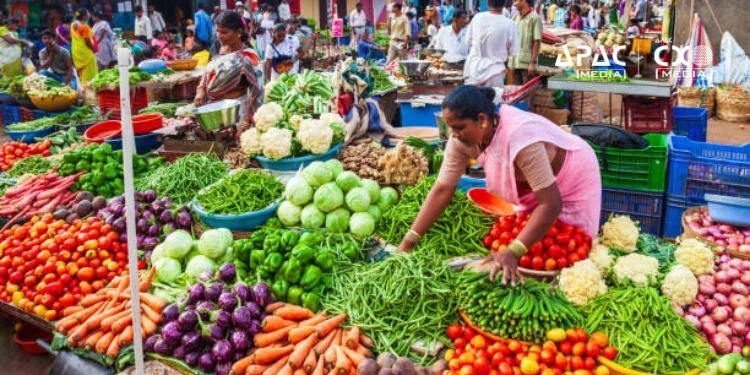
Food inflation accelerated to 5.5% in July, while inflation in personal transport and goods transport rose above 7% each, according to data released Monday by India’s Ministry of Statistics and Programme Implementation.
Tata Motors CV Q1 Results: Net Profit Jumps 83% YoY to Rs 2,560 Crore on Tata Capital Gain; Revenue Up 19%
India’s central bank kept its benchmark interest rate unchanged earlier this month, even as several Asian peers raised rates to contain inflationary pressures stemming from disruptions to global energy supplies amid the Iran war.
India, the world’s fastest-growing major economy, is particularly exposed to the disruption. The country imports nearly 85% of its fuel requirements and depends on energy supplies moving through the Strait of Hormuz.
“Despite unideal weather conditions, farmers have remained determined, ensuring that demand for food is met. Additionally, above-adequate inventories of staples, including rice and wheat, have supported domestic availability of food,” said, Rajeev Juneja, President, PHDCCI.
Fresh attacks on vessels in the Red Sea and Gulf of Oman have raised concerns about further disruption to global shipping routes, pushing oil prices to around $90 a barrel on Wednesday.
Reserve Bank of India Governor Sanjay Malhotra said headline inflation had moved above the central bank’s 4% target, although core inflation remained moderate.
Malhotra said economic growth had remained resilient but warned that the outlook was “hazy” because of uncertainties linked to the southwest monsoon, El Niño, geopolitics, and global trade policies.
“The CPI inflation remains within the RBI tolerance band of 4 ± 2%. India’s domestic demand continues to be buoyant, exports remain robust, and industrial production continues to grow steadily. Coupled with RBI’s prudent monetary measures, India’s economy shows resilience, said Ranjeet Mehta, SG & CEO, PHDCCI.
The RBI expects headline inflation to peak in the quarter ending December, with core inflation likely to follow a similar pattern.
The combination of rising inflation and higher energy costs has raised expectations that the RBI could begin raising interest rates toward the end of the year.
Morgan Stanley said it expects the central bank to start raising rates in December, with a cumulative 75 basis points of hikes taking the policy rate to a terminal level of 6%.
The brokerage also expects India’s headline inflation to average 5% in the financial year ending March 2027, citing firmer food inflation and higher input costs.
–ENDS–
Disclaimer: This article is for informational purposes only. APAC Media is not liable for any investment decisions or losses. Please conduct your own research or consult a financial advisor before investing.
Also Read: