
























Key decision makers from Indian PSUs discussed the future roadmap towards these goals at the APAC PSU Conclave. Swapnil Mishra reports on the suggestions and best practices discussed.
As India stands on the brink of a new era defined by digital transformation and sustainable development, the Public Sector Undertakings (PSUs) too find themselves at the crossroads of technology adoption. In a rapidly evolving landscape, where challenges like urban safety, cloud adoption, and data security demand immediate attention, India’s PSUs too are not lagging behind in taking up the tech baton.
With a commitment to innovation and resilience, these public sector entities are not only safeguarding the nation’s infrastructure but also setting new benchmarks in efficiency and technological advancement. The recent PSU Conclave organized by APAC News Network brought these efforts into sharp focus, highlighting the strategies and collaborations that are shaping the future of India’s public sector.
The discourse during the Conclave highlighted innovative practices, technological advancements, and collaborative efforts necessary to steer India’s PSUs toward a sustainable and digitally empowered future.
Enhancing Urban Safety with Advanced Technologies
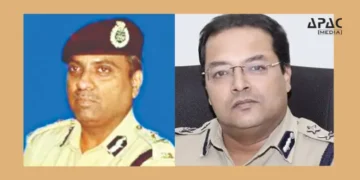
B. Shankar Jaiswal, IPS, Joint Commissioner of Police (Tech, Cyber & Licensing), Delhi Police

B. Shankar Jaiswal discussed the ambitious Safe City Project, an initiative under the Nirbhaya Fund being implemented across eight cities in India. “The Safe City Project is a critical initiative under the Nirbhaya Fund, currently being implemented across eight cities in India,” Jaiswal stated. The project aims to enhance public safety through the integration of advanced technology and intelligent traffic management systems.
Jaiswal also highlighted the Tech Hunt Program, a monthly initiative by Delhi Police that fosters collaboration with PSUs and other stakeholders to explore innovative security solutions. “Delhi Police is proactive in seeking innovative solutions through our ‘Tech Hunt Program,’ a monthly initiative that brings together PSUs and other stakeholders,” he noted.
Moreover, Jaiswal emphasized collaborations with DRDO and IIT Delhi to develop large language models (LLMs) and humanoid interfaces for citizen interaction. “We are collaborating with DRDO and IIT Delhi to develop large language models (LLMs) and humanoid interfaces for citizen interaction,” Jaiswal highlighted.
Indian Oil’s Commitment to Digital Transformation and Sustainability
Manish Grover, Executive Director (Strategic IS & IS), Indian Oil Corporation Limited

Manish Grover of Indian Oil Corporation Limited (IOCL) shared insights on the company’s approach to digital transformation and sustainability. “At Indian Oil, digital transformation is not just about technology; it’s about creating a sustainable future where innovation and environmental responsibility go hand in hand,” Grover remarked.
He introduced IOL’s ‘I DRIVE’ initiative, which integrates AI, machine learning, and Generative AI into operations to optimize processes, reduce waste, and enhance energy efficiency. “Our ‘I DRIVE’ initiative integrates AI, machine learning, and Generative AI into our operations to optimize processes, reduce waste, and enhance energy efficiency,” Grover explained.
Grover also discussed IOCL’s commitment to renewable energy and environmental responsibility, highlighting the company’s achievement of 89% wastewater reuse and the goal of net-zero emissions by 2046. “We are committed to renewable energy and have achieved 89% wastewater reuse, with a goal of net-zero emissions by 2046,” Grover added.
Cybersecurity and Automation in the Power Sector
M.A.K.P Singh, Ex-Member (Hydro), CEA & Ex-CISO, Ministry of Power, Government of India

M.A.K.P Singh underscored the importance of hydropower development in meeting India’s energy needs, particularly through storage projects that ensure a steady energy supply. “Developing hydropower projects is essential to meeting India’s growing energy demands,” Singh emphasized.
Singh also addressed the growing reliance on automation and IoT devices in the power sector, stressing the importance of cybersecurity in protecting these infrastructures from natural disasters and cyberattacks. “With the increasing reliance on automation and IoT devices in the power sector, protecting these infrastructures from natural disasters and cyberattacks is crucial,” he noted.
Overcoming Challenges in Cloud Adoption and Digital Transformation
Subhash Chand, Chief Information Security Officer (CISO), ICAR-Indian Agricultural Statistics Research Institute

Subhash Chand spoke about the challenges PSUs face in digital transformation, particularly in cloud adoption and regulatory compliance. “Digital transformation in PSUs faces significant challenges, especially in assessing cloud load and ensuring regulatory compliance,” Chand stated.
He highlighted the skillset gap within PSUs as a major hurdle and suggested that outsourcing skilled labor is necessary to bridge this gap. “The skillset gap within PSUs is a major hurdle in implementing advanced technologies,” Chand pointed out.
Navigating the Complexities of Cloud Adoption
Alok Shankar Pandey, Additional General Manager – IT & CISO, Dedicated Freight Corridor Corporation of India Ltd

Alok Shankar Pandey discussed the complexities of cloud adoption, including challenges related to scalability, availability, and cost efficiency. “Cloud adoption presents challenges related to scalability, availability, and cost efficiency,” Pandey explained.
He also emphasized the challenges of managing a multi-cloud environment, noting that PSUs often prefer working with a limited number of cloud service providers to avoid complications. “Managing a multi-cloud environment can be complex, especially when new cloud service providers are introduced,” Pandey added.
Oil India Limited’s Digital Transformation Journey
Mousumi Deka, Chief General Manager – ERP, Oil India Limited

Mousumi Deka shared Oil India Limited’s experience with digital transformation, beginning with their first data center in 1983. “Oil India’s digital transformation journey began with our first data center in 1983,” Deka shared.Despite challenges in procurement processes, particularly in transitioning to cloud-based solutions, Oil India Limited continues to make significant progress in ERP implementation and cloud adoption. “Procurement processes present significant challenges, especially when transitioning to cloud-based solutions,” Deka noted.
Ensuring Data Security During Cloud Migration
Salman Mahmmood, Deputy General Manager (General), Food Corporation of India
Salman Mahmmood emphasized the critical importance of data security during cloud migration, highlighting the need for meticulous planning and careful data selection. “Ensuring the security of government data during cloud migration is critical,” Mahmmood stated.He outlined the key steps involved in a successful cloud migration, including defining clear objectives, selecting appropriate data, and managing the quantum of data to be migrated. “Careful planning in defining objectives, selecting data, and managing the quantum of data to be migrated is essential,” Mahmmood emphasized.
The Role of Innovation and Sustainability in the Power Sector
Arvind Kumar Talan, Chief Financial Officer (CFO), Energy Efficiency Services Limited (EESL
Arvind Kumar Talan highlighted the significant role that PSUs play in India’s energy sector, generating over 50% of the country’s power. “PSUs generate over 50% of India’s power, playing a significant role in the country’s energy sector,” Talan highlighted.
He discussed Energy Efficiency Services Limited’s (EESL) initiatives, including LED bulbs and streetlight projects under the Ujjwal Bharat program, emphasizing the importance of sustainability and collaboration with the private sector. “Innovation and sustainability are key to success, and collaboration with the private sector is essential to elevating the country to new levels of development,” Talan emphasized.
Evolution and Innovation in Indian Railways
GVL Satyakumar, a key figure in the technological evolution of Indian Railways, provided a comprehensive overview of the Centre for Railway Information Systems (CRIS) and its pivotal role over the last three decades. “CRIS has emerged as the sole organization that designs, manages, and deploys IT applications across all operations of Indian Railways, encompassing core operations, data management, and analytics,” he explained.
Highlighting the importance of technological innovation, Satyakumar noted, “Asset management within Indian Railways is now fully digitalized. Additionally, a significant CCTV project is underway to install six lakh cameras in engines and coaches, enhancing security and monitoring capabilities.”
Satyakumar also emphasized the rapid development of capabilities within Indian Railways, particularly in collaboration with startups, academia, and corporate partners. “We are training people at IIT Delhi for data management, analytics, and IT applications,” he stated, underscoring the critical need for continuous engagement with various stakeholders to drive innovation.
Leveraging IT and Telecommunications for Societal Impact
Sanjeev Kumar, ITS, shed light on the impactful initiatives undertaken by his PSU under the Ministry of Communication. “Our projects in IT and telecommunications are not just about infrastructure; they are transforming lives in remote areas,” Kumar said.

He elaborated on several key initiatives, including virtual classrooms that connect hundreds of classes online, solving the issue of teacher unavailability in remote regions. “We also provide online coaching platforms that prepare students in remote areas for professional fields like engineering and medicine,” he added.
Kumar highlighted the role of telemedicine in bridging the healthcare gap, stating, “We connect specialized doctors with patients in underserved areas, making health records available online for primary and secondary healthcare.” In the realm of disaster management, Kumar mentioned the early warning system, which sends alerts via mobile networks to ensure timely safety measures. “We are also working on advanced camera systems for vehicles to detect driver distraction or fatigue through facial recognition, as well as paramilitary solutions to identify whether an object under surveillance is a human or an animal,” he added.
Driving Data-Driven Decisions in Public Sector
Pratap Chandra Mahapatra, Chief Sales Officer at CSM Technologies Pvt Ltd., highlighted the importance of data in decision-making processes. “Data-driven decisions are crucial for effective governance and operational efficiency,” Mahapatra stated.

He shared insights into how CSM Technologies has developed data dashboards that help organizations make informed decisions. “For instance, we have created dashboards for the Odisha government on paddy procurement analytics and school infrastructure, which have been instrumental in optimizing resources and improving outcomes,” he explained.Mahapatra also mentioned their innovative contributions, such as India’s first Virtual HR Assistant, Medha K, and emphasized the organization’s global presence in software technologies, IT development, and digital transformation.
Strengthening Cyber Defense in PSUs
Cybersecurity emerged as a critical theme during the conclave, with experts discussing the challenges and strategies for protecting India’s public sector from cyber threats. Rajneesh opened the discussion by addressing the broader cybersecurity challenges faced by PSUs, particularly in sectors with legacy systems. “Legacy systems, supply chain vulnerabilities, and manpower limitations are significant hurdles in our cybersecurity efforts,” noted Rathore, emphasizing the need for modernization and skilled personnel.
Dipesh elaborated on both external and internal challenges, highlighting the sophisticated nature of cyber threats. “External attackers often have access to information about our cyber defense technologies, and we must be prepared for AI-based cyber-attacks. Internally, our teams need to be vigilant and proactive in defending against these evolving threats,” he explained.
Anwaya and Ashish, both experts in the power sector, pointed out the unique challenges in protecting Operational Technology (OT) systems. “The major challenge in the power industry is securing OT systems, which have a longer lifespan than IT systems but are more vulnerable to attacks,” said Ashish Goel DGM (IT), CSIRT-Power. He stressed the importance of isolating networks and differentiating connections to safeguard these critical infrastructures.
Rajneesh further inquired about best practices for PSUs to prevent cyber attacks. Anwaya emphasized resilience over mere prevention, stating, “We must focus on building resilient systems that can quickly recover from breaches.” Anurag added, “Regular quality checks and data governance are essential to maintain the integrity of our data and systems.”
Indian Railways: The Backbone of India’s Economy
Tanveer Khan delivered an insightful presentation on the role of Indian Railways as a driver of the Indian economy. “Indian Railways is not just a mode of transportation; it is a crucial component of India’s environmental sustainability and accessibility,” Khan remarked. He provided an overview of Indian Railways’ journey and its plans, including the construction of a vast quantum of track networks unprecedented in any other country.
Khan highlighted iconic projects such as the one connecting Baramulla, the highest peak in Jammu and Kashmir, to the remotest areas in the northeast, showcasing the immense connectivity potential of Indian Railways. “Under the Amrit Bharat Station Scheme, we are also planning to modify the infrastructure of railway stations across the country,” he added. Khan invited PSUs to collaborate in various areas, including freight transportation, railway infrastructure, and technology innovation.
Leveraging Technology for the Greater Good
Golok Kumar Simli’s presentation focused on the broader theme of leveraging technology for public welfare and empowerment. He advocated for the principles of “Adopt, Adapt, and Evolve,” emphasizing the need for early adoption and continuous improvement of technology. “Automation should aim at removing silos, improving governance, and enhancing customer experience (CX),” Simli asserted, highlighting the transformative potential of technology in governance
Simli also stressed the importance of data-driven decisions, stating, “Data is central to all aspects of work, from workload management to governance. It helps in making timely and informed decisions.” He underscored the need for security by design, particularly in protecting critical assets and ensuring privacy in data governance frameworks.
The Path Forward for India’s PSUs
The PSU Conclave underscored the critical need for resilience, sustainability, and digital transformation within India’s public sector. Through collaborative efforts, innovative practices, and a strong focus on cybersecurity, PSUs are well-positioned to navigate the challenges of the future. The event highlighted the importance of collaboration between government, academia, and the private sector in driving these efforts forward, ensuring that India’s PSUs can achieve their full potential in the years to come.









Discussion about this post