





















New Delhi: A research team at the Indian Institute of Technology (IIT) Guwahati has developed a novel material capable of detecting adulteration or contamination of kerosene in petrol. The same material can also selectively absorb oil from water and solidify it, offering a sustainable solution for addressing oil spills and fuel fraud.
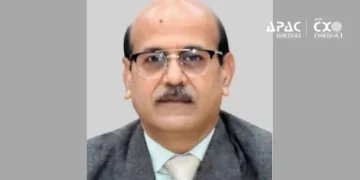
The findings have been published in the journal Chemical Engineering in a paper co-authored by Prof. Gopal Das, Professor, Department of Chemistry, along with research scholars Rubi Moral and Oiyao Appun Pegu. The innovation comes at a time when environmental disasters caused by oil spills continue to endanger marine ecosystems, coastlines and livelihoods.
According to the Oil Tanker Spill Statistics 2024, around 10,000 tonnes of oil were spilled into the world’s oceans and seas last year, underscoring the urgent need for safer, more efficient cleanup methods.
To tackle this challenge, the IIT Guwahati team has created a Phase-Selective Organogelator (PSOG) molecule, a unique, safe material that undergoes a hierarchical self-assembly process to trap and solidify oil. This molecule can selectively form gels in the presence of oils like kerosene and diesel, allowing for easy removal without disturbing the surrounding water.
Explaining the innovation, Prof. Gopal Das said, “Our developed PSOG possesses a unique ability to selectively form gel only in the presence of some specific oil samples, namely kerosene, and diesel, among a vast range of studied organic solvents as well as oil samples. Moreover, such highly selective PSOG might also be useful in targeting some specific oil samples from a complex mixture of different oil samples, and recovery of the same from different water bodies. So, this work might give a new direction in the future developments of PSOGs for water remediation as well as detection of different fuel adulteration.”
Beyond its environmental applications, the material could help detect kerosene adulteration in petrol, a persistent issue in India, particularly among low-income groups, where mixing kerosene with petrol is used to cut costs. Such adulteration, however, poses serious safety hazards and has led to several accidents involving kerosene stoves and engines.
The research team plans to expand their work to detect various types of fuel adulteration and improve the efficiency of the detection process by further refining the molecular design and functionality of the PSOG material.