



















Kanpur: Going to the root cause of grievances through a dashboard. This has been the latest technology adoption by the Government of India.
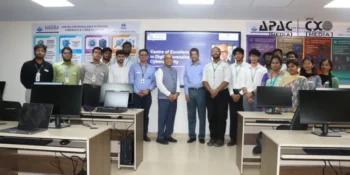
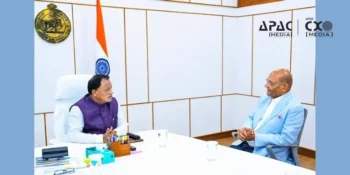
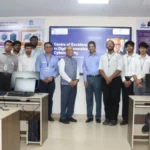
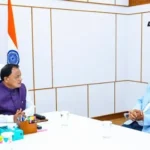
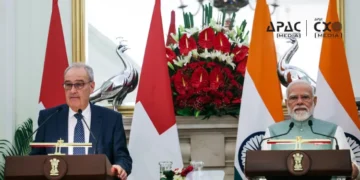
Dr Jitendra Singh, Union Minister of State for Personnel, Public Grievances and Pensions, recently launched the IGMS 2.0 Public Grievance portal and the Automated Analysis in Tree Dashboard portal. The Intelligent Grievance Monitoring System (IGMS) 2.0 Dashboard has been implemented by IIT Kanpur following an MoU with DARPG for upgrading Centralized Public Grievance Redress and Monitoring System (CPGRAMS) with Artificial Intelligence capabilities. The Dashboard provides instant tabular analysis of Grievances Filed & Disposed, State-wise & District-wise Grievances Filed & Ministry-wise data.
Singh also launched the Special Campaign 3.0, under the theme “Digital DARPG”. The Department of Administrative Reforms and Public Grievances, operating under the theme “Digital DARPG,” has undertaken several initiatives during the Special Campaign 3.0. These initiatives aim to encourage unified service delivery portals across India, expedite the resolution of public grievances, employ AI and emerging technologies for more effective grievance redressal, advocate for sustainable practices, and enhance cleanliness and efficient record management in offices.
Unified Service Portals
The DARPG organised a meeting with 27 senior officials, including Right to Service (RTS) Commissioners from various States/UTs, along with senior officers responsible for implementing the Right to Services Acts. The purpose of this meeting was to identify 164 services that can be delivered as e-Services on a pan-India basis, in addition to the existing 56 mandatory e-Services.
The RTS Chief Commissioners were informed about the publications on the “NeSDA way forward” by the DARPG. The DARPG released six monthly reports as part of the “NeSDA Way Forward” initiative, which established the starting point for the number of e-services, including mandatory e-services, to be offered by various States/UTs about the “NeSDA Way Forward” dashboard.
States/UTs were made aware of the importance of promoting the concept of faceless, suo-moto delivery and unified service delivery portals. During these discussions, the States/UTs explored the possibilities of transitioning various offline services to online platforms based on sector-specific needs. At present, States/UTs collectively offer 14,736 e-services with Jammu & Kashmir leading with a maximum of 1,028 e-services. Out of the total 2,016 mandatory e-services, 1,505 are currently available, achieving a saturation rate of 74.6%.
Jammu & Kashmir, Kerala, and Odisha have provided 100% of their service through their designated Single Unified Service Delivery Portals, known as e-UNNAT, e-Sevanam, and Odisha One, respectively. The RTS Commissioners expressed their commitment to making every possible effort to embrace unified service portals and strive for the full implementation of e-Services in all states.
Pendency reduction in Public Grievances
The DARPG published the 17th Monthly Report on the CPGRAMS last month to raise awareness among all Ministries and Departments of the importance of addressing public grievances promptly and with a focus on quality during the Special Campaign 3.0. In the last month, the average time taken for grievance redressal across all Ministries and Departments was 19 days.
Adoption of Bharat GPT in CPGRAMS
The DARPG entered into an NDA with the Bharat GPT team, led by IIT Mumbai. This collaboration aims to develop India-specific Large Language Models (LLM) powered by Bhashini. The objective is to create a demonstrable large language model for CPGRAMS, to further enhance the process of addressing citizen grievances in CPGRAMS in the coming times.