





















New Delhi: Artificial Intelligence is reshaping the nature of work in a manner unlike previous technological revolutions, placing professionals engaged in cognitive tasks at the highest risk of job displacement, said S Krishnan, Secretary of the Ministry of Electronics and Information Technology (MeitY).
Krishnan noted that earlier waves of industrial change largely focused on mechanising physical and manual labour. In contrast, AI directly affects tasks that require thinking, analysis and decision-making, making white-collar roles more vulnerable to automation.
“For the first time, technology is challenging cognitive labour at scale,” he said, adding that professionals who primarily work with knowledge and intellectual skills now face a greater risk of replacement than manual workers did during past industrial shifts.
While acknowledging concerns around job losses, Krishnan stressed that AI also holds immense potential to enhance productivity, particularly in developing economies such as India. He argued that the long-term benefits of AI-driven growth could outweigh short-term disruptions if the transition is managed carefully.
He cautioned companies against focusing solely on immediate efficiency gains without considering broader workforce implications. According to him, the government is mindful of both the risks and opportunities associated with AI adoption.
Krishnan highlighted that the emergence of new technologies would also give rise to new categories of jobs, provided there is sufficient investment in reskilling and upskilling the workforce. Talent development, he said, will be critical to ensuring workers can adapt to changing demands.
“This is not a responsibility that rests with the government alone,” he said, calling for collaboration among industry, policymakers, educational institutions, and other stakeholders to prepare the workforce for an AI-driven future.
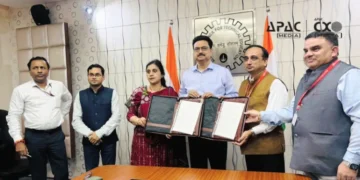
The conclave brought together industry leaders, policymakers and technology experts to discuss India’s evolving AI ecosystem and its impact on employment and economic growth.