

















In this exclusive interview, Prof. Kuldip Sarma, Co-Founder and Pro-Chancellor of Medhavi Skill University (MSU), shares insights with APAC Media on the university’s education model, deep industry partnerships, use of digital and emerging technologies, and strong focus on employability outcomes.
Sarma also highlights MSU’s inclusive approach toward students from rural and disadvantaged backgrounds, faculty upskilling, and alignment with NEP 2020, offering a clear view of how the university is shaping a future-ready, outcome-driven skilling ecosystem in India.
How do you ensure that academic learning stays closely linked with industry needs? Can you share examples of industry partnerships that have led to strong outcomes for students?
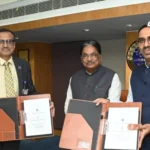
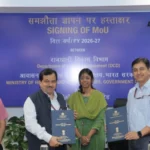
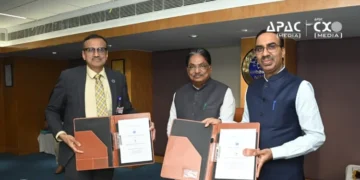
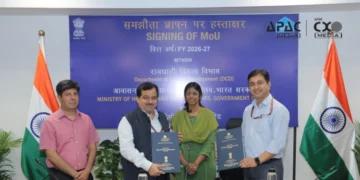
At Medhavi Skills University, industry integration is embedded into curriculum design, delivery, and assessment. Our collaborations aim to jointly deliver Work Integrated Skill-Based Higher Education (WISE) programs aligned with the National Skills Qualifications Framework (NSQF), the National Higher Education Qualification Framework (NHEQF), and NEP 2020.
As part of the partnership, both institutions jointly develop an industry-integrated curriculum that blends MSU’s academic framework with the domain expertise of the industry, ensuring that students receive strong academic grounding along with practical competencies. Students undertake extensive on-the-job training at the industry premises across India, enabling immersive, real-world learning experiences.
To further support learners, industries provide stipends and assured career progression and opportunities for meritorious student-trainees. The organisation will also hold priority for the recruitment of trained students, strengthening the employability outcomes of the programs. Additionally, students will benefit from MSU’s digital learning infrastructure, including access to the university’s LMS, digital resources, and continuous academic monitoring. Not only this, but over the last year, many industries have recruited numerous students from MSU Campus, Sikkim.
This strategic partnership aligns closely with the vision of NEP 2020, enabling students to “earn while they learn” and integrating vocational skills with formal higher education pathways.
This is one of the examples of work-integrated higher education programmes. At MSU, industry professionals participate in curriculum design and innovation, guest lectures by industry experts are a regular feature at our campuses, and on-site training offers our students practical learning. This approach reduces skill gaps and improves employability, enabling students to transition seamlessly from classroom to workplace.
How is Medhavi Skill University leveraging emerging technologies like AI, Virtual Labs, or Digital Platforms to enhance skill-based learning and create a more interactive and future-ready learning environment for students?
MSU leverages technology to make learning measurable, personalised, and outcome-driven. Our Learning Management System (LMS) tracks attendance, assessments, competencies, and progression in real time, enabling data-led academic interventions. Over 90% of students actively use the LMS for assignments and evaluations. To strengthen employability skills, we deploy the Burlington English app, which has helped improve students’ communication proficiency scores by 30–40% within one academic year.
Additionally, MSU classrooms are equipped with smart boards and digital content tools that support blended and interactive learning. These technologies ensure consistent skill development, especially for first-generation learners.
How do you measure the real impact of skill education on students’ careers?
The real impact of skill education at MSU is measured through employment outcomes, wage progression, and career continuity. We track placement rates, job roles, retention after 6 and 12 months, and vertical mobility. Currently, over 65% of MSU graduates secure employment within six months of graduation, many in skill-aligned roles. We also assess industry certifications earned, apprenticeship-to-employment conversion rates, and alumni career growth. Regular employer feedback and tracer studies help validate curriculum relevance. This data-driven approach ensures that skill education is not just about training but about delivering sustained career outcomes.
How does the university support students from diverse and rural backgrounds?
MSU was founded with a mission to democratise access to quality education for learners from rural, tribal, and economically diverse backgrounds. Nearly 70% of our students come from semi-urban and rural regions of the Northeast states. We support them through flexible learning pathways, multilingual teaching support, bridge courses, and extended academic mentoring. Earn-while-you-learn models help students sustain themselves financially while studying. Additionally, our industry-linked programmes ensure that students gain employable skills early, reducing dropout rates by over 25% compared to traditional models. This inclusive ecosystem enables students to overcome socio-economic barriers and achieve long-term career stability.
MSU offers various scholarship programs and financial aid options to students from economically disadvantaged backgrounds. By providing financial support, the university ensures that all deserving students, regardless of their financial situation, have the opportunity to pursue higher education. This initiative is in line with NEP’s recommendation to ensure that underprivileged students are not left behind, promoting social equity within the education system.
Merit-based scholarships are available based on performance in national entrance exams or the MSAT. Additionally, scholarships up to 100% are offered to the wards of war widows/ war disabled from our defense forces. Other scholarship opportunities include the “School topper scholarship,” where top-performing students in their respective schools are offered up to 100% concession on admission fees.
The Chancellor’s Scholarship at Medhavi Skills University (MSU) seeks to identify more than just academic achievement—it rewards leadership, service, and excellence in co-curricular activities.
Students who have attained national-level ranking in competitions or co-curricular activities are eligible for up to a 100% tuition waiver under this scholarship.
How do you guide students in choosing the right skill pathways?
At MSU, career guidance begins from day one. Each student is assigned a mentor who is an industry expert, ensuring exposure to real-world career pathways. Structured counselling sessions, aptitude assessments, and labour market insights help students make informed decisions. Industry mentors guide students on emerging roles, skill demand trends, and growth opportunities. As a result, over 80% of students choose specialisations aligned with high-demand sectors such as healthcare, IT, logistics, and management. This personalized mentoring model ensures clarity, reduces career mismatches, and improves long-term employability outcomes.
How do you build faculty capacity for skill-based and experiential teaching?
Faculty capacity building is central to MSU’s academic strategy. A significant proportion of our faculty members are industry practitioners with 8-15 years of hands-on experience, ensuring practical teaching. In addition, MSU conducts regular Faculty Development Programmes (FDPs), industry immersion programmes, workshops, and seminars. Over the past year, more than 120 faculty members have undergone structured upskilling interventions focused on experiential pedagogy, assessment innovation, and digital tools. Continuous exposure to industry trends ensures that teaching remains relevant, applied, and aligned with evolving workforce needs.
Recently, Mr Pritam Kumar Bhagat, Faculty Member, School of Computer Science and Engineering (SoCE), has successfully represented the university at the State-Level Viksit Bharat Young Leader Dialogue and has been selected for the National-Level Viksit Bharat Young Leader Dialogue 2026.
Mr. Bhagat presented on the topic “Enhancing Productivity through Smart and Sustainable Agriculture,” highlighting innovative, technology-driven, and sustainable approaches with strong real-world impact. His participation underscores MSU’s emphasis on applied research, innovation, and interdisciplinary problem-solving.
Further strengthening this achievement, Mr. Bhagat has also been selected at both the district and state levels of the IndiaSkills Competitions in the field of cloud computing, reflecting his technical expertise and commitment to excellence in emerging digital technologies.
At MSU, we ensure, not just the students but also the faculty and staff are upskilled to keep pace with the evolving workspaces.
How does Medhavi Skill University align with national skilling and education policies?
MSU is deeply aligned with NEP 2020, particularly its emphasis on flexibility, mobility, and learner-centric education. A key pillar is the National Credit Framework (NCrF) and Academic Bank of Credits (ABC), which enable modular learning with multiple entry and exit options.
MSU is a national frontrunner in implementing these reforms and has uploaded the highest number of credits in the ABC for individual candidates, surpassing all other private universities in Sikkim combined in 2024. This leadership reflects our commitment to personalised learning pathways, credit portability, and nationally aligned skill education at scale.
MSU leverages NEP frameworks and apprenticeship provisions for facilitating students with practical and experiential learning at real industry settings for industry immersion in the true sense to make them workplace-ready from day one.